
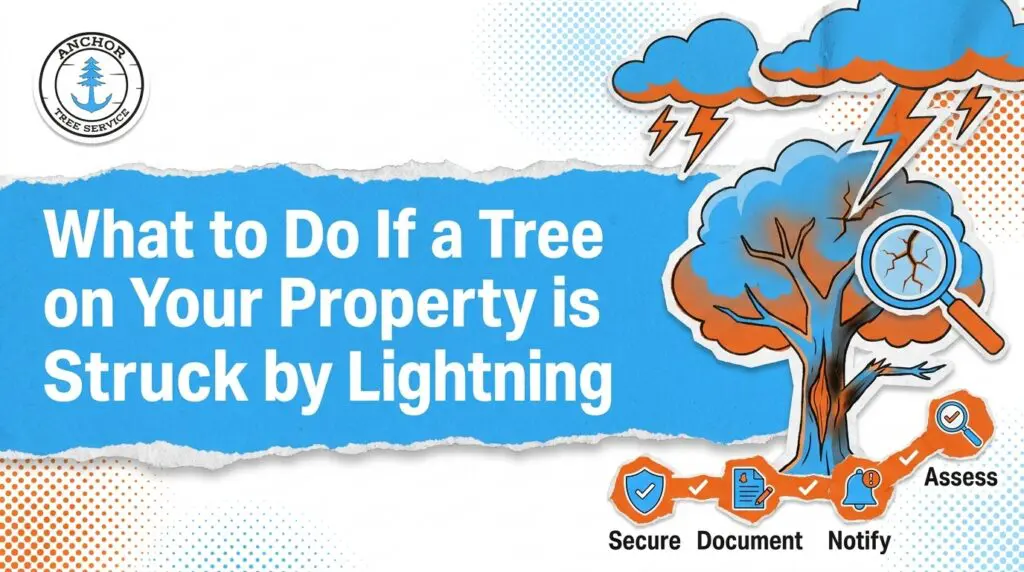
When a tree on your property is struck by lightning, the damage is not always obvious from the outside. A tree can be struck and still stand, but internal tissues may be shattered, bark may be split, and the root system can be compromised. Knowing what to do if a tree on your property is struck by lightning starts with safety and careful assessment.
We understand the urgency of a lightning-damaged tree, and the most important lesson is to act in the right order: secure the area, document the damage, notify the right parties, and then bring in a professional assessment. This guide walks through each step so you can protect your family, your home, and your trees.
Immediate Safety Actions After a Lightning Strike
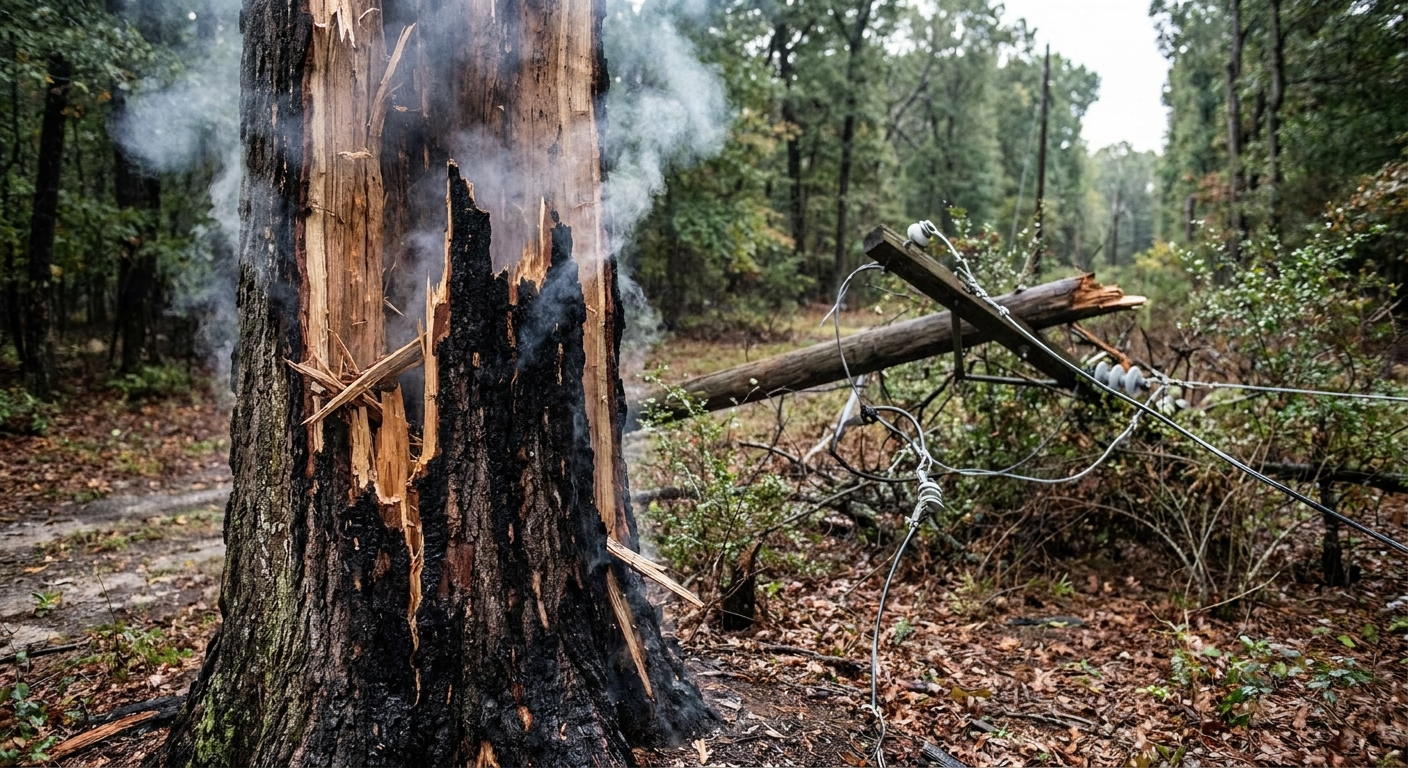
Your first priority is human safety. Lightning can leave a tree smoldering internally, create hidden structural weaknesses, and bring down live power lines. Do not approach the tree until you are sure the area is safe.
Check for fire or smoke and call emergency services if needed
Look for visible flames, smoke, or a burning smell near the tree. If you see any sign of fire, call 911 immediately. Do not attempt to extinguish a large or spreading fire yourself; leave the area and let firefighters handle it.
Stay clear of downed power lines and report them immediately
Assume every downed line is energized, even if it appears dead. Keep at least 30 feet away, warn others to stay back, and call your electric utility right away. Never touch a power line or anything in contact with it.
Evacuate the area if the tree is near structures or blocking exits
If the tree is leaning toward your home, garage, or any exit path, move everyone to a safe distance. A lightning-damaged tree can fall or shed large limbs without warning, so treat the entire area as an active hazard zone until assessed.
Ensure all people and pets are accounted for and safe
Do a headcount of everyone who was on the property, including pets. Keep animals indoors or far from the tree; they may be frightened and hide near danger. Once everyone is accounted for, stay out of the damaged area.
Assessing Visible Damage to the Tree and Surroundings
After the immediate safety concerns are addressed, you can begin a careful visual assessment from a safe distance. Do not climb on the tree or stand directly underneath it. The goal is to note what you see so you can tell professionals and your insurer what happened.
Look for split bark, broken branches, or charred areas on the tree
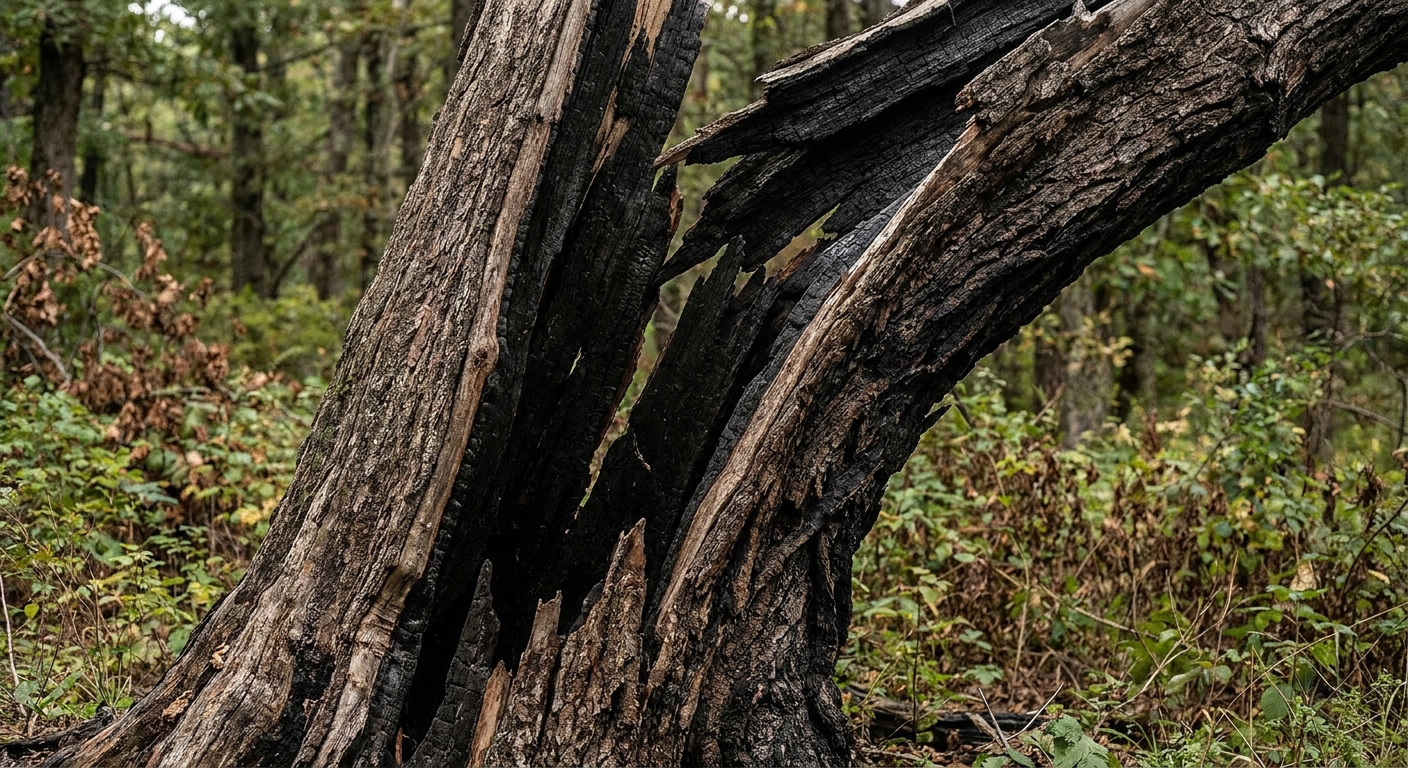
Lightning often travels down the trunk and can cause a long vertical split, strips of bark blown off, or blackened scorch marks. Note any large branches that have broken off or are hanging by a thread.
Check if the tree is leaning or if roots are uplifted
Walk around the tree (from a safe distance) and look for a new lean or soil pushing up around the base. Uplifted roots or a cracked root plate mean the tree may be unstable and could fall over, especially in wind.
Observe damage to nearby structures, vehicles, or landscaping
Take note of any branches or trunk sections that have hit your house, fence, shed, or vehicles. Even small debris can cause dents or broken windows. The more you notice now, the easier it will be to file a complete insurance claim.
Note any unusual smells or sounds that could indicate hidden hazards
A smell of gas, a hissing sound, or crackling from the tree or nearby utility equipment can signal a leak or electrical fault. If you notice any of these, leave the area immediately and call the appropriate utility company from a safe distance.
Documenting the Incident for Insurance Purposes
Thorough documentation is essential for your insurance claim and for any future disputes about responsibility. Start as soon as it is safe to be near the tree, and record everything before any cleanup begins.
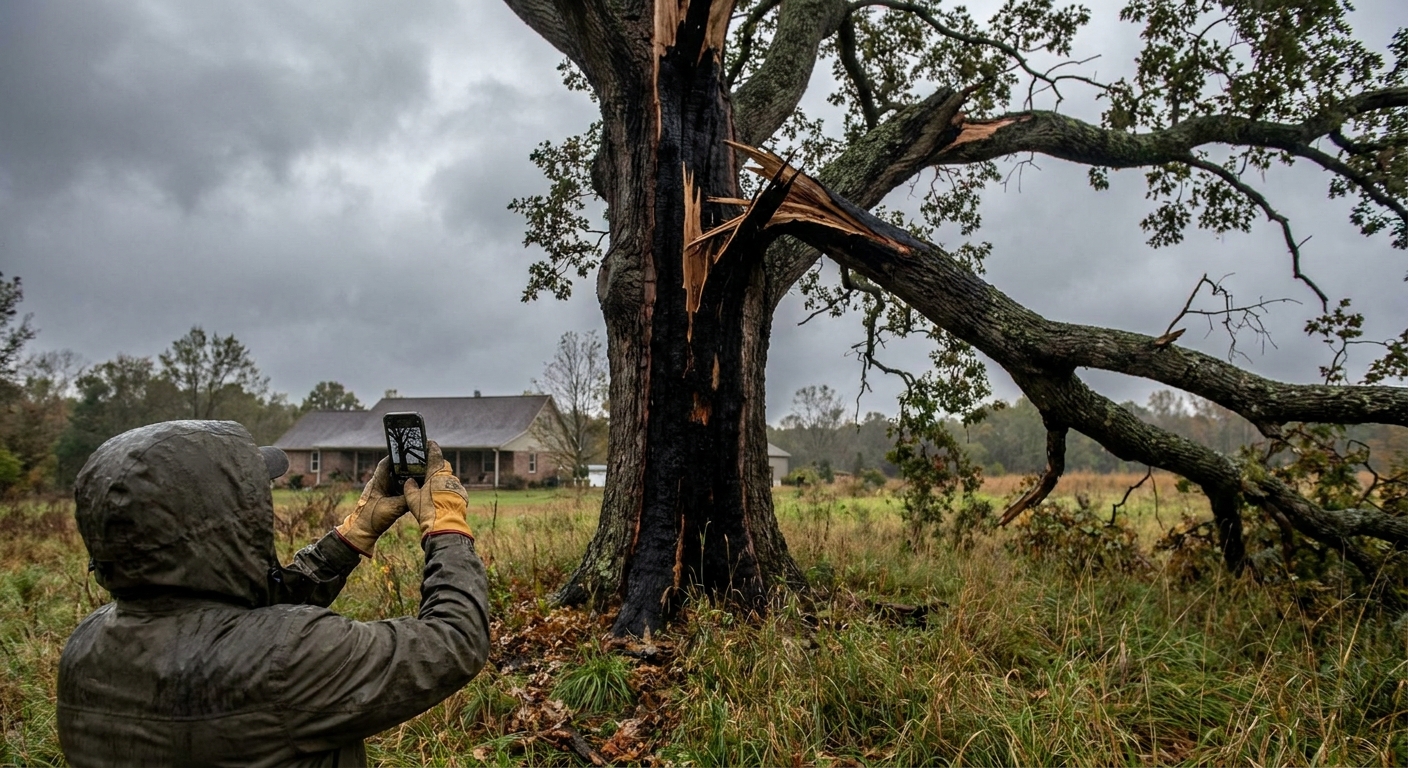
Take clear photos and videos of the tree, property, and any damages
Use your phone to capture wide shots showing the whole scene, then close-ups of the trunk, split bark, broken branches, and any damage to structures or vehicles. Photograph the tree from multiple angles, including the base and the area where it stands.
Record the date, time, and weather conditions at the time of the strike
Write down when you first noticed the damage and what the weather was like. If you can find a local weather report for that day, save a copy or take a screenshot. This helps establish that lightning, not neglect, caused the damage.
Gather witness statements if any neighbors or passersby saw the event
If someone saw the lightning strike or heard the thunder at the same time, ask for their name and contact information. A short written statement from a witness can strengthen your claim, especially if the damage is not immediately obvious.
Keep a written log of all actions taken and communications with professionals
Make a note every time you call your insurer, a utility company, or a tree service. Include the date, time, who you spoke with, and what was said. This log will help you stay organized and can support your claim if questions arise later.
Contacting Utility Companies for Downed Lines or Gas Leaks
If lightning has brought down power lines or caused a gas leak, you need utility professionals on site before anyone else. Do not wait for the insurance adjuster or tree service to handle these dangers.
Call the electric utility if power lines are down or sparking
Report the exact location and describe what you see. The utility will send a crew to de-energize the lines and make the area safe. Do not touch or move the lines yourself, and keep everyone away until the utility says it is clear.
Notify the gas company immediately if you smell gas or suspect a leak
If you smell rotten eggs or hear hissing near the tree or your home, treat it as a gas emergency. Leave the property immediately, and call the gas company or 911 from a safe distance. Do not use phones, light switches, or any electrical device near the leak.
Avoid touching or moving any utility equipment
This includes downed wires, meter boxes, and any metal poles or equipment that might be in contact with a line. Even non-metallic objects can conduct electricity if wet. Leave all utility equipment for the professionals.
Wait for utility professionals to declare the area safe before proceeding
Only after the electric and gas utilities have inspected and cleared the area should you allow anyone to work on the tree or begin cleanup. Your safety always comes first.
Notifying Your Home Insurance Provider
Contact your home insurance provider as soon as possible after the lightning strike. Most policies cover lightning damage, but the sooner you report it, the smoother the process will be.
Report the incident to your insurance company as soon as possible
Call your insurer or start a claim online. Provide basic details: what happened, when, and the extent of damage you have seen so far. They will assign a claim number and tell you the next steps.
Inquire about coverage for tree removal, property damage, and temporary repairs
Ask specifically what your policy covers. Many policies will pay for removing a tree that has fallen on a covered structure, and for repairing that structure. If the tree is still standing but damaged, coverage may differ. Clarify before you hire anyone.
Provide your documentation and follow the insurer’s instructions
Send the photos, videos, witness statements, and written log you have already prepared. Follow any instructions the insurer gives you about securing the property or preventing further damage, as this is often a condition of coverage.
Ask about any deadlines or additional requirements for the claim
Some insurers have time limits for filing a claim or for submitting supplementary documentation. Make a note of any deadlines and what is needed, so your claim does not get delayed or denied.
Consulting a Certified Arborist for Tree Assessment
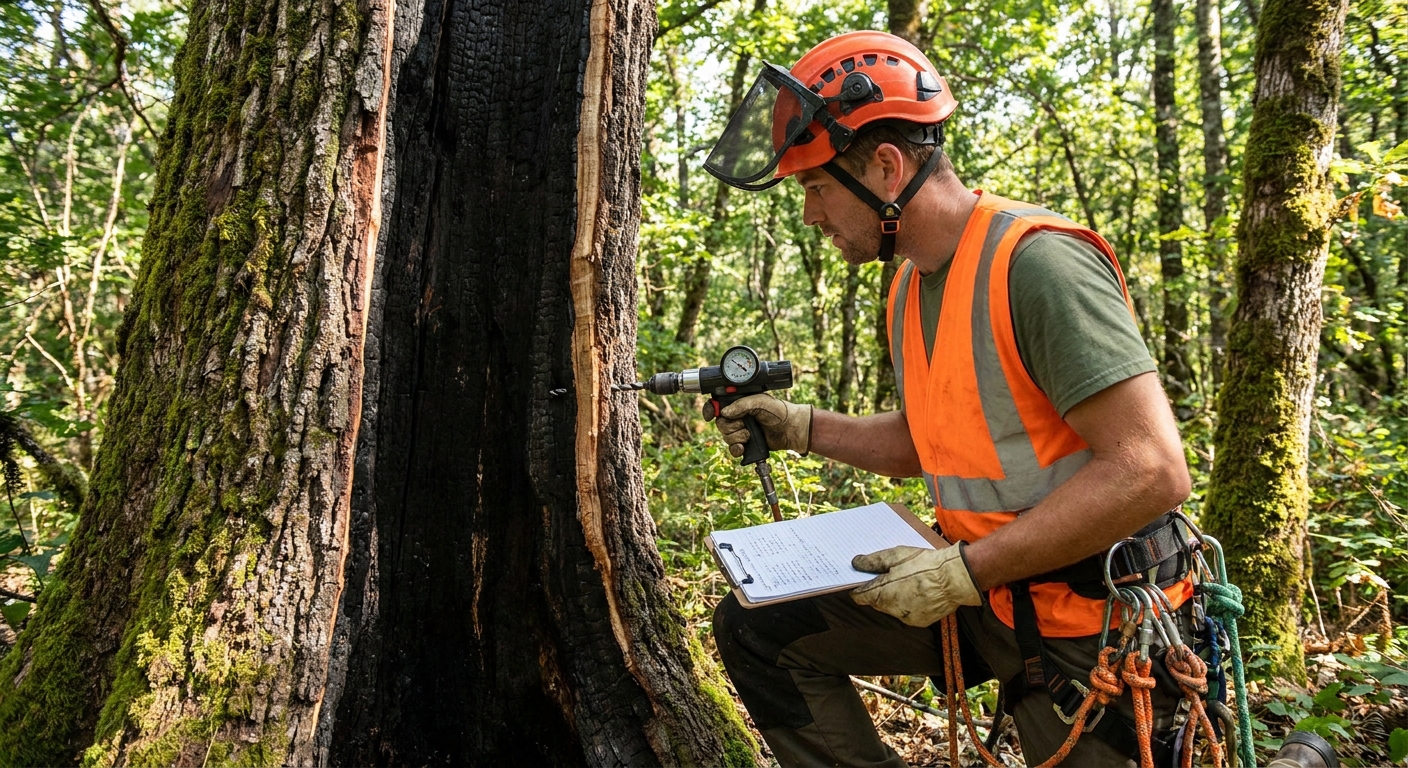
After the immediate dangers are handled, you need a professional tree assessment. Lightning can cause internal damage that is invisible from the outside, and only a qualified arborist can determine whether the tree can be saved or needs to be removed. Our team includes an ISA Certified Arborist with Tree Risk Assessment Qualification, which helps us evaluate lightning damage thoroughly. We also carry full general liability and workers’ compensation insurance for your protection.
Schedule an appointment with a certified arborist to inspect the tree
A certified arborist has the training to recognize subtle signs of lightning damage, such as cambium death, xylem disruption, and root damage. They will inspect the tree from the base to the crown and may use tools like a resistograph to test wood density.
Ask about the tree’s structural integrity and chances of survival
Some lightning-struck trees can recover if the damage is limited to one side. Others are too compromised and become a falling hazard. The arborist will explain what they see and give you an honest assessment of the tree’s future.
Obtain professional recommendations for treatment or removal
Based on the assessment, the arborist may recommend pruning damaged limbs, cabling and bracing for structural support, or complete removal if the tree poses a risk. If removal is necessary, they should explain why and what the process will involve.
Request a written report for insurance or legal purposes
Ask the arborist to provide a written report describing the damage, the cause, the tree’s condition, and their recommendations. This report is valuable for your insurance claim and can help resolve any disputes about whether the tree was healthy before the strike.
Determining Responsibility and Legal Considerations
After a lightning strike, questions often arise about who is responsible for the tree and any damage it caused. Understanding ownership and local rules can prevent legal headaches later.
Identify property boundaries to establish ownership of the tree
Check your property survey to see exactly where the tree trunk sits relative to your property line. If the trunk is entirely on your property, you are generally responsible for the tree. If it is on the line, it may be a shared boundary tree, and decisions and costs are shared with your neighbor.
Check local regulations regarding tree damage and removal
Some areas require a permit to remove a tree, even a damaged one. Contact your local municipality or check their website before any removal work begins. An arborist familiar with local rules can also advise you.
Consult legal counsel if disputes arise with neighbors or municipalities
If your neighbor’s tree was struck and fell onto your property, or if there is disagreement about who should pay for cleanup, you may need legal advice. Keep all documentation and written communications to support your position.
Review any homeowners association rules that may apply
If you live in an HOA community, there may be specific rules about tree removal, replacement, or landscaping changes. Check your governing documents or contact the HOA before taking action.
Arranging for Professional Tree Removal or Cleanup
Once the assessment is complete and you know the tree’s fate, you may need to arrange for removal or cleanup. Always hire a licensed and insured tree service for this work.
Hire a licensed and insured tree removal service
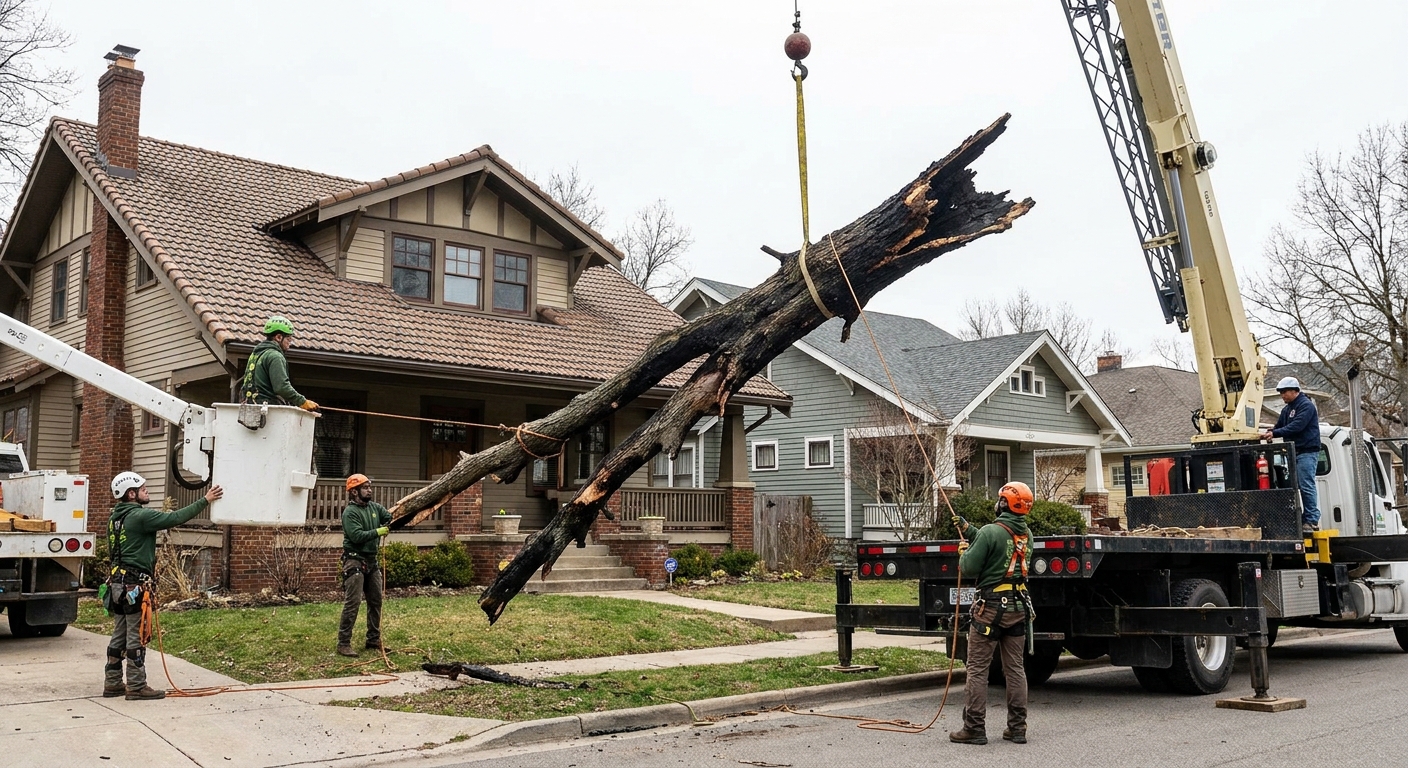
Ask for proof of license and insurance before any work begins. A professional tree service will have the equipment and training to remove a lightning-damaged tree safely, even if it is leaning over a structure.
Discuss the scope of work and confirm the plan in writing
Walk through the job with the tree service before they start. Clarify what will be removed, how the debris will be handled, and what the site will look like when they finish. A written plan protects both parties.
Ensure the crew follows safety protocols and uses proper equipment
Watch for basic safety practices: hard hats, ropes, rigging, and a clear work zone. A professional crew will not take shortcuts around a damaged tree. If you have concerns, ask about their safety procedures before they begin.
Coordinate cleanup of debris and restoration of the affected area
After the tree is down, the crew should remove all wood, branches, and debris from your property. Discuss whether stump grinding is included, and if the area will be raked and left level. A good cleanup restores your yard to a usable condition.
Long-Term Tree Health and Lightning Prevention
Once the immediate crisis is over, think about how to protect your remaining trees and prevent future lightning damage. A few proactive steps can make a big difference.
Consider installing a lightning protection system for vulnerable trees
For high-value or historic trees, a lightning protection system can be installed. This typically involves a copper conductor running from the top of the tree down to a ground rod, directing the electrical charge safely into the earth. Consult a professional arborist for design and installation.
Schedule regular inspections by a certified arborist
Have a certified arborist inspect your trees every one to three years, or after major storms. Early detection of decay, cracks, or root problems can help you address issues before they become dangerous.
Implement proper pruning and maintenance to reduce risk
Remove dead, weak, or overextended branches before storm season. Proper pruning reduces wind resistance and removes potential lightning attachment points that could cause the tree to fail.
Monitor the tree’s recovery and health over subsequent seasons
If your lightning-struck tree is given a chance to survive, watch it carefully for the next few years. Look for new growth, callus tissue over wounds, and any signs of decline such as thinning canopy or mushroom growth at the base. Report changes to your arborist.
If a tree on your property has been struck by lightning, the best time to act is now. Contact us for a professional assessment and a clear plan for removal or recovery, so you can protect your property and your peace of mind.
Areas We Serve
Storms don’t hit every neighborhood the same way, and this guide explained how to spot risks after a strike. Our area hub pages give an at-a-glance view of where we work and route you to the best local next steps.
- Central Saanich Arborists & Tree Services
- Colwood Arborists & Tree Services
- Esquimalt Arborists & Tree Services
- Highlands Arborists & Tree Services
- Langford Arborists & Tree Services
- North Saanich Arborists & Tree Services
- Oak Bay Arborists & Tree Services
- Saanich Arborists & Tree Services
- Sidney Arborists & Tree Services
- Victoria Arborists & Tree Services