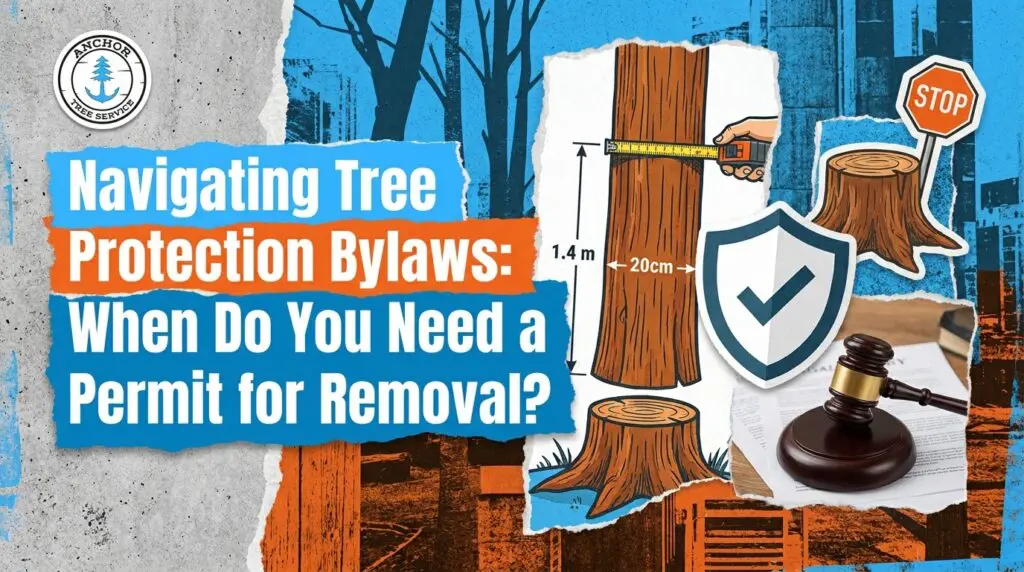
The single most common reason a tree removal becomes a compliance problem is a misunderstanding of the measurement threshold. Before you plan any cutting, you need to know whether the tree reaches the protected size, measured at 1.4 metres above the ground. Navigating tree protection bylaws and knowing when you need a permit for removal starts with this measurement, not with the tree’s health or your reason for cutting.
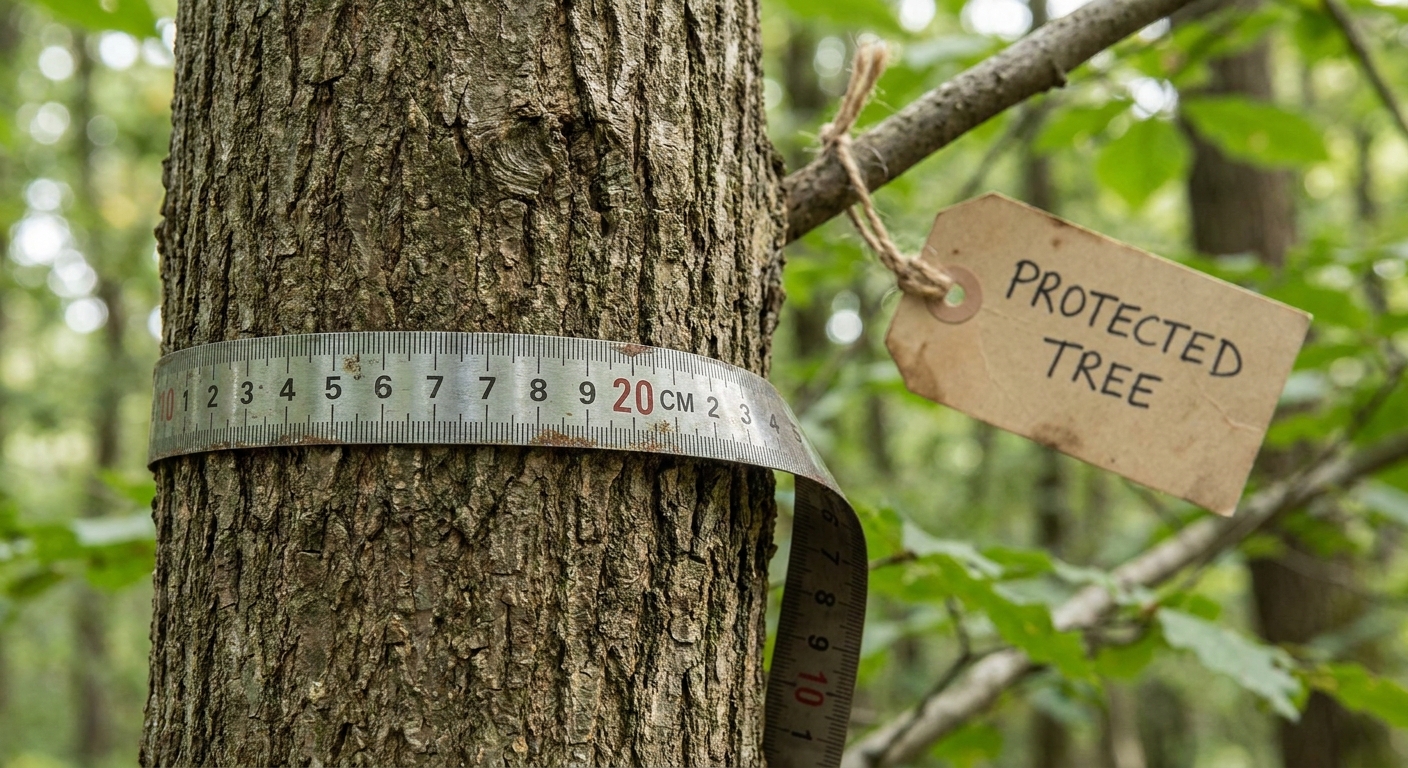
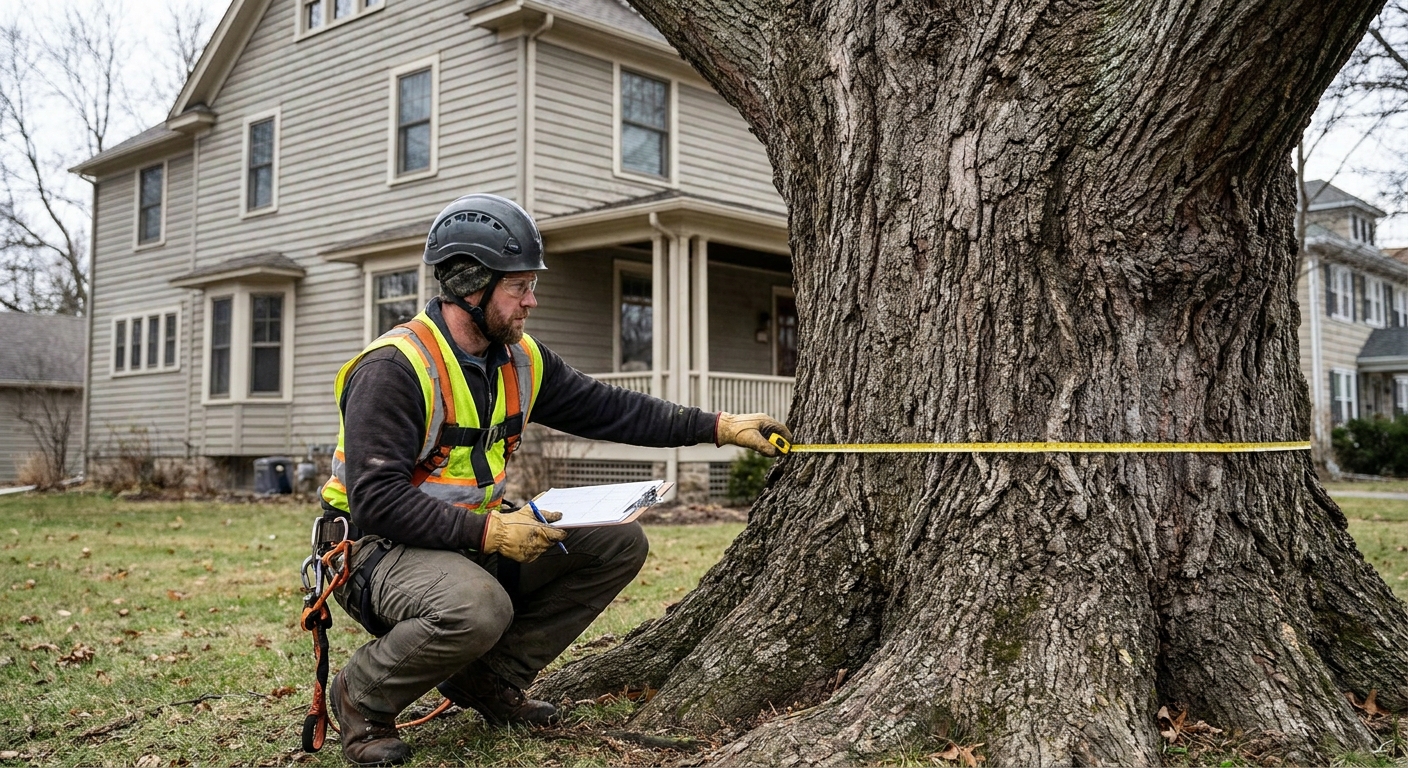
In most jurisdictions, a permit is required to remove any tree on private property with a trunk diameter of 20 centimetres or greater. The measurement is taken at 1.4 metres above ground, often called diameter at breast height. A 20-centimetre diameter corresponds to roughly 64 centimetres in circumference. This threshold is the primary trigger for the permit requirement.
Understanding the Tree Protection Bylaw
Tree protection bylaws exist to preserve the urban forest canopy, manage stormwater, improve air quality, and prevent unnecessary loss of mature trees. They apply to trees on private property, not just public land. Under these regulations, a tree that meets the protected size or category cannot be removed, significantly pruned, or damaged without prior written approval. The permit must be posted in a visible location during the removal work. Enforcement is typically handled by a city arborist or urban forestry department, who reviews applications, inspects sites, and can issue stop-work orders or fines for violations.
Navigating Tree Protection Bylaws: When Do You Need a Permit for Removal?
The core question for any property owner is whether a specific tree triggers the permit requirement. The answer almost always comes down to size, category, and reason for removal.
Diameter Threshold
A permit is needed to remove any tree with a trunk diameter of 20 centimetres or more, measured at 1.4 metres above the ground. If you measure the circumference instead, a tree at the threshold will be roughly 64 centimetres around. Trees with multiple stems may have their diameters combined to determine whether the threshold is met, depending on local rules. Always measure at the correct height; measuring too low or too high can understate or overstate the size.
Exceptions to Permit Requirement
Trees smaller than 20 centimetres in diameter generally do not require a removal permit. However, two important exceptions apply. If the tree was previously planted as a required replacement tree, it remains protected regardless of size. Likewise, a smaller tree that is part of an approved landscape design for a new development project may still need a permit. Do not assume a small tree is automatically exempt if either condition could apply.
Permissible Reasons for Removal
Meeting the size threshold does not guarantee approval, but certain reasons are commonly accepted when documented correctly. Permissible reasons include:
- The tree is within the designated building envelope on a development site and cannot be reasonably retained.
- An arborist certifies that the tree is dead, dying, or poses a hazard to people or property.
- An arborist certifies that the tree is obstructing utility wires and cannot be pruned without compromising its health or appearance.
- An accredited plumber certifies that the tree’s roots are directly interfering with or blocking sewer or drainage systems.
Each reason requires specific documentation, usually from a qualified professional. A general preference to remove a healthy tree for view, shade, or leaf litter is rarely sufficient on its own.
Protected Tree Categories
Beyond the standard size threshold, some trees receive additional protection based on their designation or history. Heritage trees and significant trees, often catalogued for age, rarity, cultural value, or exceptional form, may require a more rigorous review and may be protected even if they are below the standard diameter. Any tree planted as a required replacement under a previous permit remains protected until it reaches a certain size or until a new permit allows removal. If you suspect a tree has heritage status, check the municipal register or consult an arborist before planning any work.
Who is Responsible for Obtaining a Permit?
Responsibility for obtaining a tree removal permit falls on the party who owns or controls the property where the tree is located. This includes:
- Homeowners removing a single tree that meets the protected threshold.
- Developers and builders whose site plans require removal of protected trees, even if the trees are inside the building envelope.
- Strata corporations and multi-residential property managers responsible for common areas and landscaping.
- Contractors hired to perform the work, although the legal obligation typically remains with the property owner.
In every case, the permit must be obtained before any cutting begins. A contractor cannot delegate this responsibility; the property owner or authorized agent should verify the permit is issued and posted.
The Role of Arborists in the Permit Process
Two types of arborists are involved in most permit processes. The city arborist or urban forestry officer reviews applications, inspects trees, and enforces the bylaw. A certified arborist hired by the property owner prepares the technical documentation required with the application. Certified arborists measure the tree accurately, assess its health and structure, identify species, and explain the justification for removal or pruning. Their report is often the decisive piece of evidence in the review.
We hold ISA Certified Arborist and Tree Risk Assessment Qualification (TRAQ), which means we can prepare the arborist reports and documentation most permit applications require. Our role is to measure, assess, and provide the evidence the city needs to evaluate the request.
The city arborist may require additional information, such as photos of the root flare or a tree risk assessment. The stronger and more specific the report, the smoother the review.
How to Apply for a Tree Removal Permit
Required Documentation
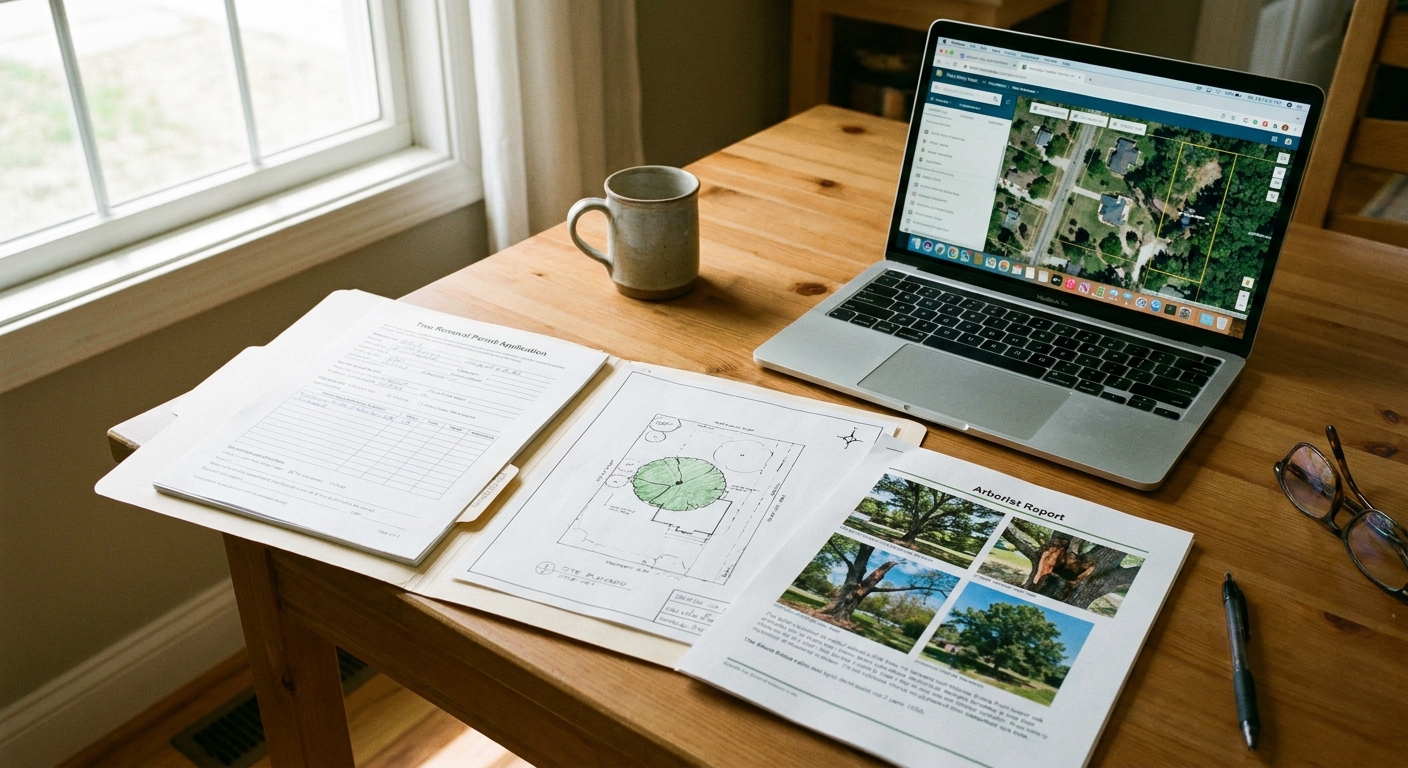
A complete application usually includes the following items:
- A site plan showing the tree’s location relative to property lines, buildings, and utilities.
- The tree’s species, diameter at breast height, and condition.
- A certified arborist report with photographs and a recommendation.
- A clear written reason for removal, tied to the permissible grounds in the bylaw.
- Current photographs of the tree, including the trunk, crown, and any defects.
Some applications also require a replacement planting plan or a tree protection plan if construction is involved. Missing any of these items is a common reason for delay.
Step-by-Step Application Guide
The process typically follows these steps:
- Measure the tree’s diameter at 1.4 metres above ground to confirm whether it meets the threshold.
- Consult a certified arborist to assess the tree’s health and determine if a report is needed.
- Gather the site plan, photographs, and any specialist reports (plumber, utility, etc.).
- Submit the application and supporting documents to the appropriate city department or online portal.
- Allow time for review, which generally takes two to four weeks after a complete submission.
- Once approved, post the permit in a visible location on the property before any work begins.
The permit is usually valid for a limited period, often six months. If work is delayed, check whether an extension is possible.
Penalties for Non-Compliance
Removing a protected tree without a permit can result in fines ranging from $1,000 to $20,000 per tree, depending on the jurisdiction and the severity of the violation. In addition to fines, the city may issue a stop-work order, require the planting of replacement trees at the owner’s expense, and potentially prosecute repeat offenders. If a contractor performs illegal work, the property owner may still be held responsible. Always verify the permit is issued and posted before any cutting begins.
Tree Replacement Requirements
When a permit is granted, it almost always includes a condition to plant one or more replacement trees. The number and species may be specified based on the size and type of tree removed. For example, removing a 20-centimetre tree might require one replacement, while a much larger tree could require several. Replacement trees must be planted within a set time frame and may be subject to a security deposit that is refunded once the city confirms the planting. Failure to plant required replacements can result in additional fines or revocation of future permits.
Tree Protection During Construction
Trees on or near a construction site need more than just a permit for removal; retained trees must be actively protected. Standard measures include installing fencing around the tree protection zone, which is typically based on the tree’s dripline, and prohibiting storage of materials, parking of equipment, or soil disturbance within that zone. Even without physical contact, root damage from compaction or trenching can kill a healthy tree. If construction will occur near protected trees, the permit application should include a tree protection plan prepared by a certified arborist.
Common Mistakes to Avoid
The most frequent errors we see are simple to prevent once you know the rules:
- Removing a tree before the permit is officially issued, even if you are confident approval is coming.
- Misidentifying a protected tree by measuring at the wrong height or ignoring replacement-tree status.
- Ignoring replacement planting conditions after the removal is completed.
- Violating tree protection zones during construction by driving equipment or stockpiling materials near retained trees.
- Assuming a dead tree is automatically exempt; most jurisdictions still require documentation and a permit for dead or hazardous trees.
Legal Context and Common Law
Municipal tree bylaws do not exist in isolation. Provincial property legislation and common law principles can affect permit decisions and neighbour disputes. Property owners have a common law duty to maintain their trees so they do not pose a foreseeable risk to others. Negligence claims may arise if a hazardous tree is left unaddressed and causes damage. Nuisance law addresses unreasonable interference with a neighbour’s use and enjoyment of their property, such as encroaching roots or overhanging branches. Understanding these broader legal duties helps explain why arborist documentation is required for removal of dead or hazardous trees, not just healthy ones.
Boundary Trees and Shared Ownership
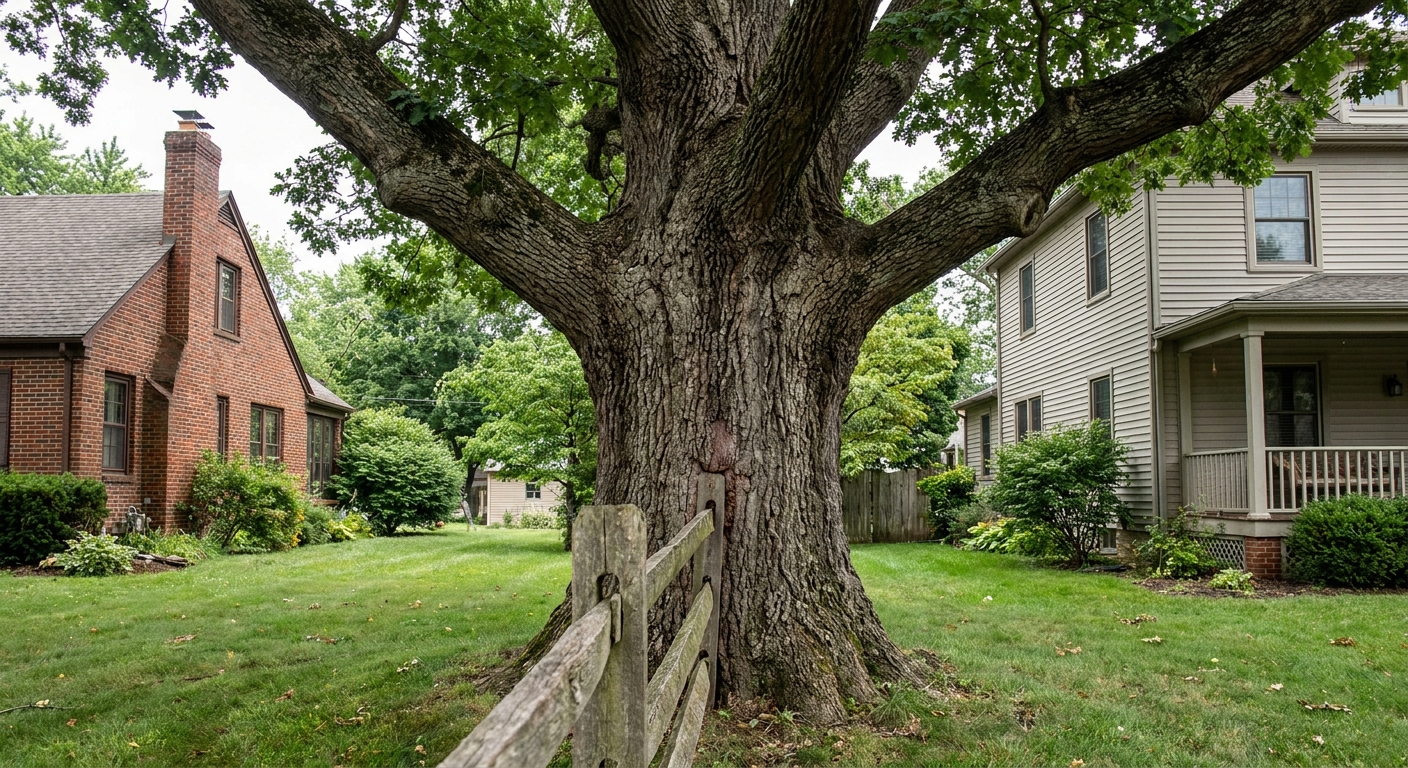
A tree whose trunk straddles a property line is generally considered jointly owned by both property owners. Neither owner can remove or significantly alter a boundary tree without the other’s consent. Even with mutual consent, the tree may still be protected by the bylaw, so a permit may be required. If neighbours disagree about a boundary tree, a land survey may be needed to establish the exact location of the trunk before any application is submitted.
Hazardous Trees: Emergency Removal
A tree that poses an immediate hazard, such as a cracked trunk leaning over a house after a storm, may qualify for expedited handling. However, emergency removal does not mean no documentation. Most bylaws still require a certified arborist’s written assessment, and the city may need to be notified as soon as practicable. In genuinely dangerous situations, you may be able to proceed with immediate mitigation to protect life and property, but you should document the hazard with photographs and follow up with the city promptly to avoid penalties. If time allows, contact the city arborist before any cutting.
Dispute Resolution for Neighbor Conflicts
When a neighbour’s branches overhang your property or roots encroach under your fence, the common law allows some self-help abatement, but only up to the property line and only if it does not cause unreasonable damage to the tree. Removing branches beyond the property line or cutting roots that destabilize the tree can expose you to liability. For significant disputes, a formal resolution may involve a surveyor, an arborist report, and possibly court action under nuisance or trespass. Mediation is often faster and less expensive. If the tree is protected, even pruning may require a permit, so consult an arborist before addressing encroachments.
If you are unsure whether a tree on your property needs a permit, the safest step is to have it measured and documented by a certified arborist before any work begins. A small investment in professional advice now can prevent large fines and replanting obligations later.
Areas We Serve
Rules and thresholds are enforced locally, and details can vary by place. Use the area hubs below to see how we work in your community and what to expect around permits and timelines—then pick your location to get started.
- Central Saanich Arborists & Tree Services
- Colwood Arborists & Tree Services
- Esquimalt Arborists & Tree Services
- Highlands Arborists & Tree Services
- Langford Arborists & Tree Services
- North Saanich Arborists & Tree Services
- Oak Bay Arborists & Tree Services
- Saanich Arborists & Tree Services
- Sidney Arborists & Tree Services
- Victoria Arborists & Tree Services