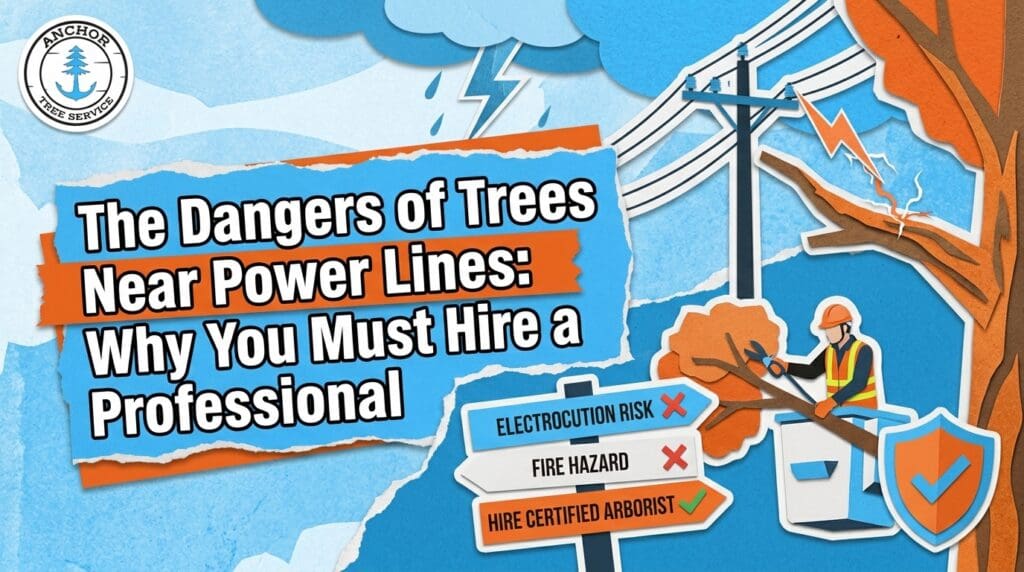
The dangers of trees near power lines begin with a simple fact: electricity can arc across open air. When a tree branch gets too close to a power line, it does not need to touch the wire; the current can jump, energize the tree, and create a lethal hazard for anyone nearby.
We have seen how quickly a routine tree task turns dangerous when someone underestimates the invisible reach of high voltage. In this guide, we explain the electrocution, fire and outage risks, the legal duties property owners face, and why the only safe decision is to hire a certified utility arborist.
The Electrocution Risk: Why Trees and Power Lines Are a Deadly Combination
How Electricity Arcs from Lines to Trees
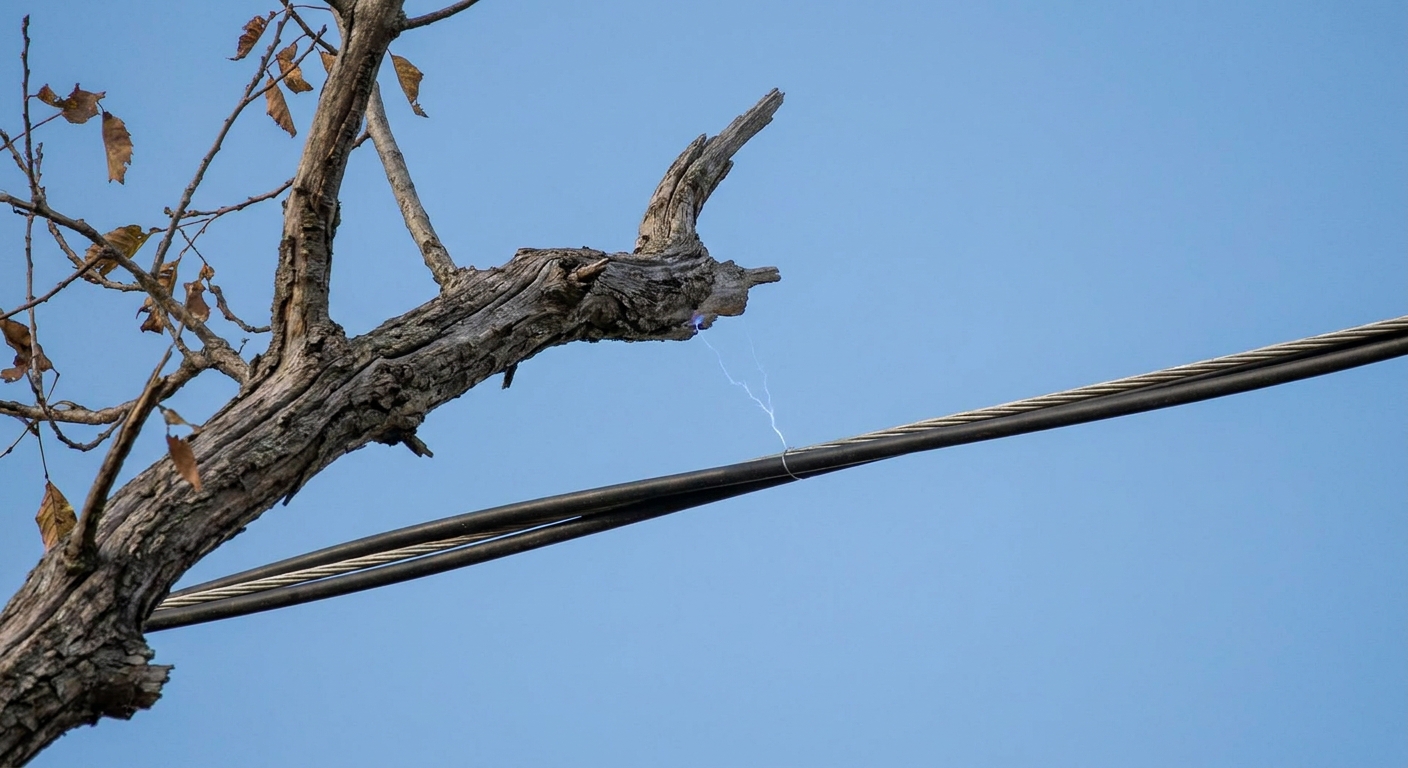
Electricity does not need a tree branch to touch a wire. Because trees and branches are good conductors, current can jump across a gap from the line to the nearest vegetation. This is called arcing. The higher the voltage, the larger the gap electricity can cross. A branch that looks safely distant may already be inside the danger zone.
The Danger of Touching an Energized Tree
When a live wire contacts a tree, the tree can become energized. Touching that tree—or even touching a ladder or branch leaning against it—can complete the circuit through your body to the ground. The result can be fatal. There is no visible warning. A tree that looks perfectly normal may be carrying lethal voltage.
Why Untrained Pruning Is a Lethal Mistake
Untrained workers often underestimate the arc distance, use metal ladders, or cut branches that then fall onto lines. Even non-conductive tools are unsafe if they are not rated for the voltage or if the worker does not maintain the required clearance. The only safe approach is to have the line de-energized or to use a certified utility arborist with insulated equipment and rescue training.
Fire Hazards: How Trees Near Power Lines Can Ignite
Branches Contacting Live Wires
When a branch rubs against a power line, it can wear through the weather coating and cause sparks. Those sparks can ignite dry leaves, bark, or nearby debris. Utility vegetation programs exist specifically because trees touching lines are a known fire risk. Even a brief contact can start a smoulder that becomes a blaze.
Downed Lines and Vegetation: A Dangerous Mix
A storm can bring a tree or branch down onto a power line, knocking the line to the ground. A downed line may still be live and can energize the ground around it. If it rests on vegetation, that vegetation can catch fire. Always stay at least 10 metres away and call 911 or your utility’s emergency line.
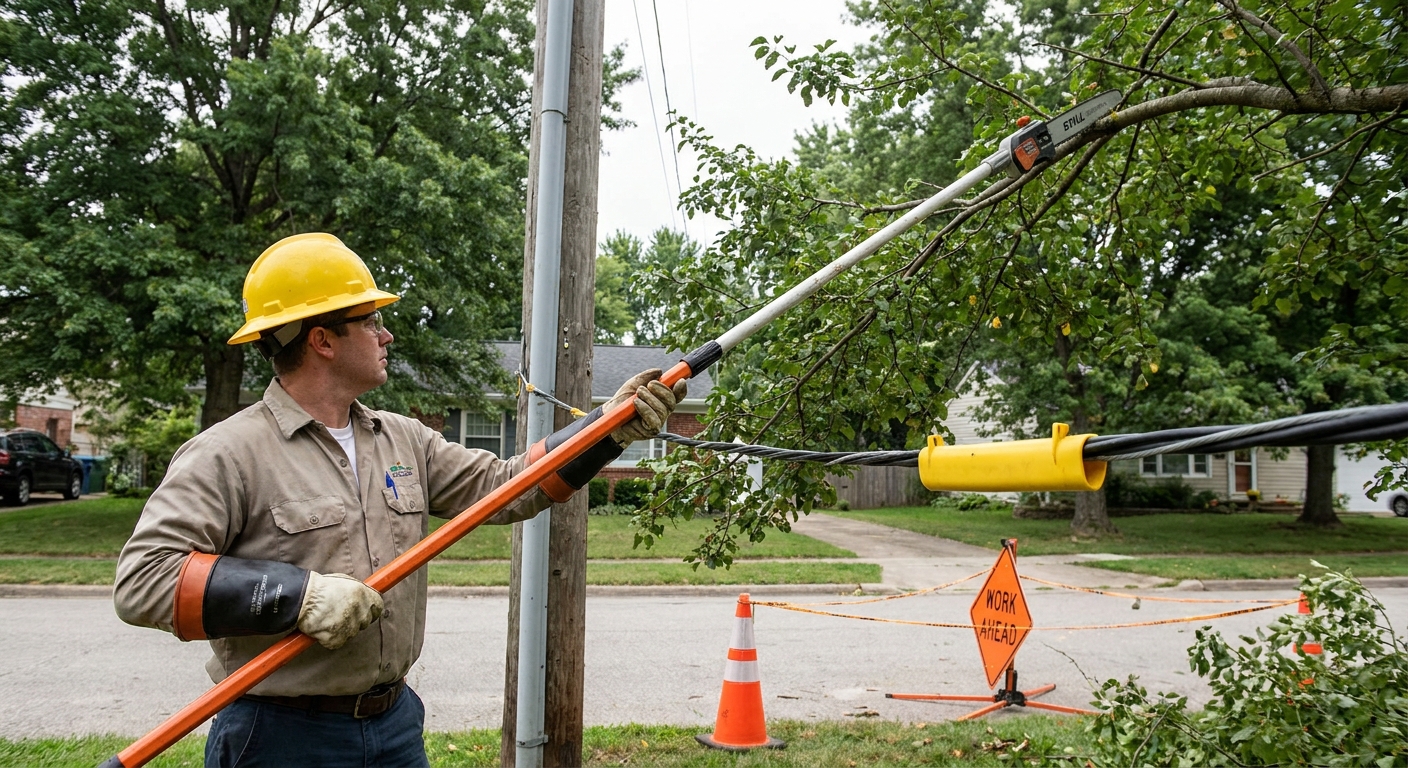
Elevated Risk in Forested Areas
In areas with dense tree cover, a single tree coming into contact with a line can ignite dry forest floor material and spread quickly. Vegetation management that keeps rights-of-way clear reduces this risk. The goal is not to remove all trees, but to create a defensible space around conductors.
Power Outages: The Impact of Trees on Electrical Reliability
Causes of Tree-Related Outages
Branches that touch lines cause short circuits and breaker trips. Falling trees can tear down conductors or damage poles. These are among the most common causes of avoidable outages. A single overgrown branch can knock out power to a whole block.
Consequences for Homes and Businesses
Outages mean more than inconvenience. Refrigerated food spoils, medical equipment may stop, security systems go dark, and businesses lose productivity. For anyone relying on electricity for health or safety, a tree-related outage can be dangerous. That is why utilities spend so much effort keeping lines clear.
The Case for Proactive Vegetation Management
Utilities trim trees to maintain clearance that ideally lasts for several years of growth. Property owners must handle the service wire from the pole to the house. Keeping that wire clear of branches prevents outages before they happen. We recommend inspecting your service drop each year and acting early if a tree is encroaching.
Property Owner Responsibilities: What the Law Requires
Maintaining Clearances Around Service Wires
As a property owner, you are responsible for keeping the service wires on your property clear of vegetation. These are the lines that run from the utility pole to your home. Branches that rub on service wires wear through the insulation and can damage household appliances or cause a shock.
Legal Obligations and Potential Liabilities
Safety regulations require property owners to keep trees at a safe distance from overhead lines. Utilities may issue cut or trim notices when a tree grows too close. If you ignore a notice, you can face fines or daily penalties. You may also be liable for damage caused by your tree to the electrical system or a neighbour’s property.
Consequences of Neglect: Fines and Liability
Beyond fines, a tree that causes a fire or outage can leave you legally responsible for repair costs and damages. Acting before a hazard develops is the responsible choice.
Understanding Safe Clearances: How Far Is Far Enough?
Voltage Determines the Safe Zone
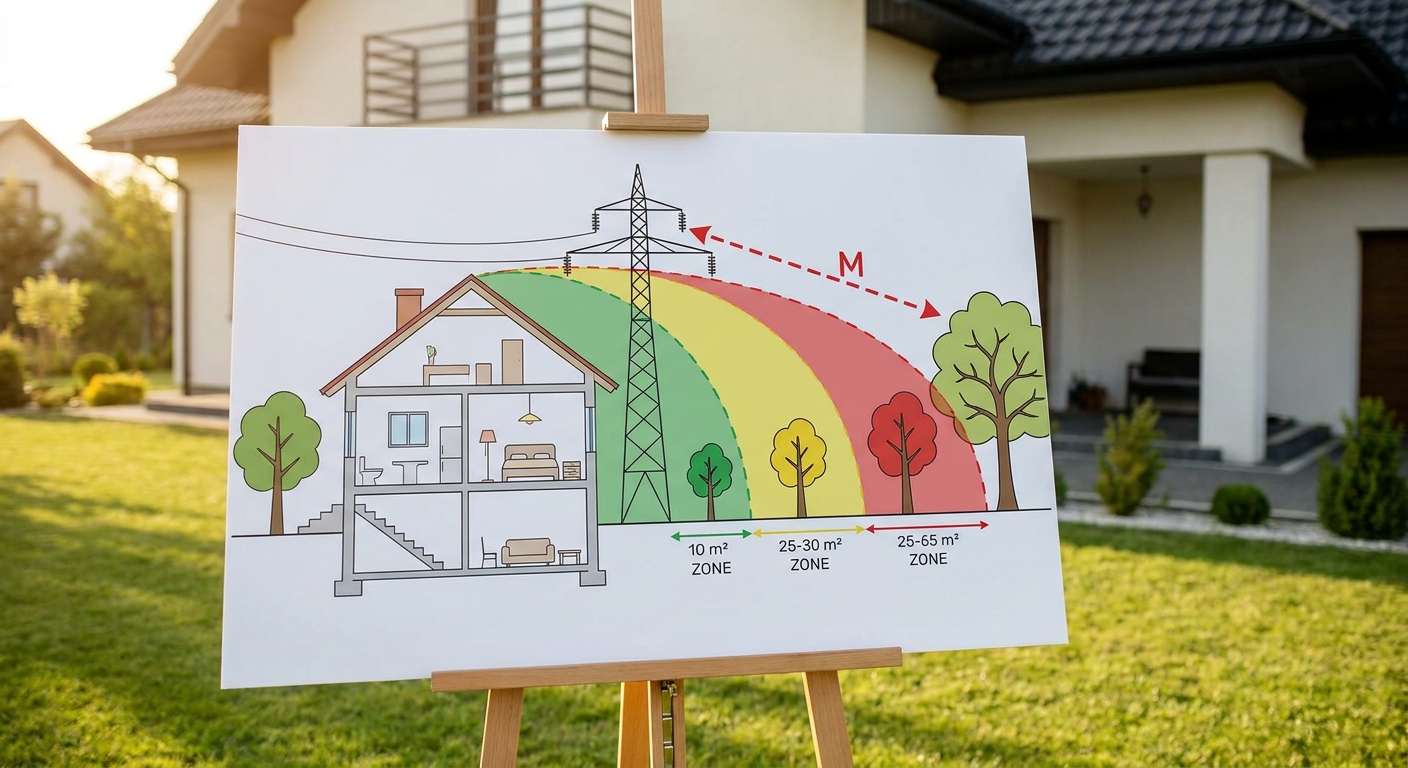
Not all power lines are equally dangerous. Higher-voltage lines require a larger buffer. Safety authorities state that a person, their tools, ladders, and any branches they are cutting must stay 3 to 6 metres away from overhead lines, depending on the line’s voltage. This applies even if the line looks insulated; the coating may be weather-worn.
Minimum Distances (3-6 Meters) Explained
For lower-voltage distribution lines, a 3-metre clearance may be acceptable. For higher-voltage transmission lines, you need at least 6 metres. These are minimums, not goals; when in doubt, add more distance. A certified utility arborist knows the exact voltage and required approach distance for every job.
Why Precision Matters
Electricity can arc, so the real danger zone may extend beyond the visible wire. A branch that is 2.9 metres away but sways in wind can close the gap. Measuring by eye is not good enough. Professionals use range finders and utility specifications to verify clearance before any cut.
Why You Must Hire a Certified Utility Arborist
Specialized Training and Safety Protocols
Certified utility arborists are trained to work near energized lines. They know how to identify voltage, maintain approach distances, use insulated tools, and perform aerial rescue if something goes wrong. They also coordinate with the utility to have lines de-energized or shielded when necessary.
The Risks of Hiring Untrained Workers
An untrained person may make a cut that looks fine but drops a branch onto the line, causing an outage or fire. They may also make improper pruning cuts that damage the tree’s health, leading to dead limbs that fall later. The short-term savings never justify the long-term risk.
What Certifications to Look For
Look for a certified arborist with a utility specialist endorsement and a Tree Risk Assessment Qualification (TRAQ). These credentials demonstrate training in both tree health and electrical safety. When you hire us, you get a team that includes an ISA Certified Arborist with TRAQ—exactly the kind of certified utility arborist this work demands.
What to Do If You Spot a Dangerous Tree Near a Power Line
Stay Back and Warn Others
If you see a tree branch touching a line, or a downed line on vegetation, do not approach. Keep at least 10 metres away and keep children and pets away too. Warn neighbours and passersby to stay clear. Never try to move the branch or line yourself.
Reporting Hazards to the Utility
Call your utility’s emergency line or 911 if there is an immediate danger. Describe the location, the type of line if you know it, and whether the tree is smoking, sparking, or on the ground. Your utility can dispatch a vegetation coordinator or emergency crew to assess the scene.
What Happens After You Report
The utility will classify the hazard by risk. For urgent situations—like a tree on a line—they may de-energize the circuit and send a crew. For less urgent clearance issues, they may issue a work order or a cut/trim notice. If the line is your private service wire, you will need to hire a certified utility arborist to do the pruning.
Safe Planting Practices: Preventing Future Dangers
Choosing the Right Tree Species
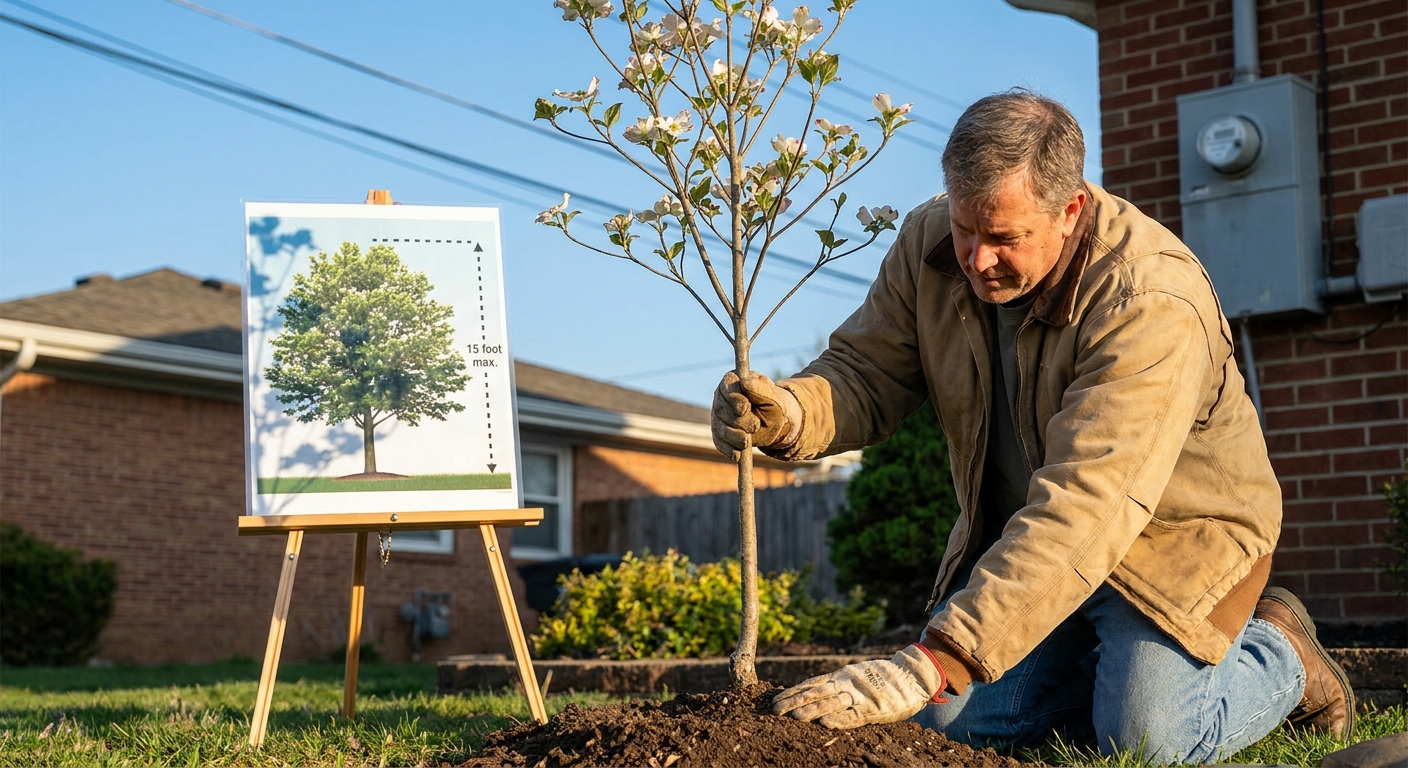
Match the tree’s mature height and spread to the space. Under or near power lines, choose small, low-growing species that will never reach the conductor zone. Avoid fast-growing, tall species like poplars or willows that will quickly become a hazard.
Placement: How Close Is Too Close?
Plant trees far enough away from overhead lines that their mature canopy cannot enter the 3-to-6-metre clearance zone. Also keep trees and shrubs at least one metre from pad-mounted transformers and other electrical equipment, and three metres from the access side. A little extra distance now prevents a dangerous removal later.
Long-Term Maintenance Tips
Inspect your trees each year for dead branches, signs of decline, or growth toward lines. Have a certified utility arborist prune before branches get too close. Maintaining a clear, healthy canopy around service wires is the best way to avoid emergencies and keep the power on.
Conclusion: Prioritize Safety and Professional Help
The dangers of trees near power lines are not worth guessing about. Electrocution, fire, and outages can all result from one overgrown branch. Property owners have a legal and practical duty to keep trees clear of wires. The only safe way to do that is to hire a certified utility arborist who understands voltage clearances, proper pruning, and emergency response. If you are unsure about a tree near a power line, contact a certified utility arborist before doing anything else.
Areas We Serve
Keeping people and property safe around overhead lines also means knowing who covers your neighbourhood. Our area hubs bring together local information in one place, so you can see where we work and match your location to the right team.
- Central Saanich Arborists & Tree Services
- Colwood Arborists & Tree Services
- Esquimalt Arborists & Tree Services
- Highlands Arborists & Tree Services
- Langford Arborists & Tree Services
- North Saanich Arborists & Tree Services
- Oak Bay Arborists & Tree Services
- Saanich Arborists & Tree Services
- Sidney Arborists & Tree Services
- Victoria Arborists & Tree Services