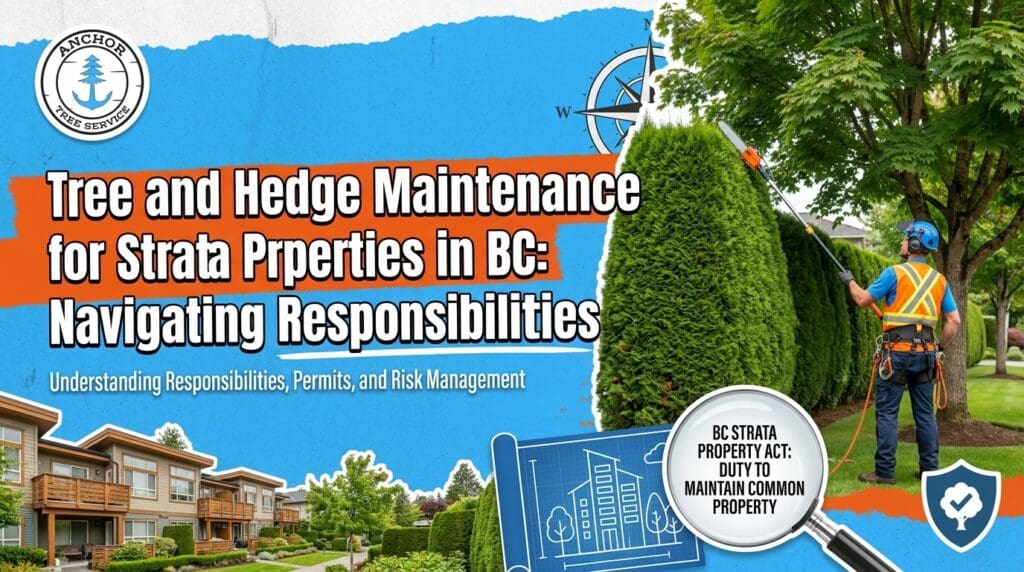
Tree and hedge maintenance for strata properties in BC requires more than seasonal trimming—it demands a clear understanding of who is responsible for each plant, which permits apply, and how to manage risk. Under the Strata Property Act, a strata corporation has a legal duty to maintain and repair common property, and that includes trees, shrubs, and hedges growing in shared areas.
The first step is to identify which trees and hedges are common property and which belong to individual lots. Once that is clear, you can plan seasonal work, secure the right permits, and choose a qualified arborist who understands strata-specific requirements. Below, we walk through the key responsibilities, permitting rules, and practical management strategies.
Tree and Hedge Maintenance for Strata Properties in BC: Understanding Corporation Responsibilities
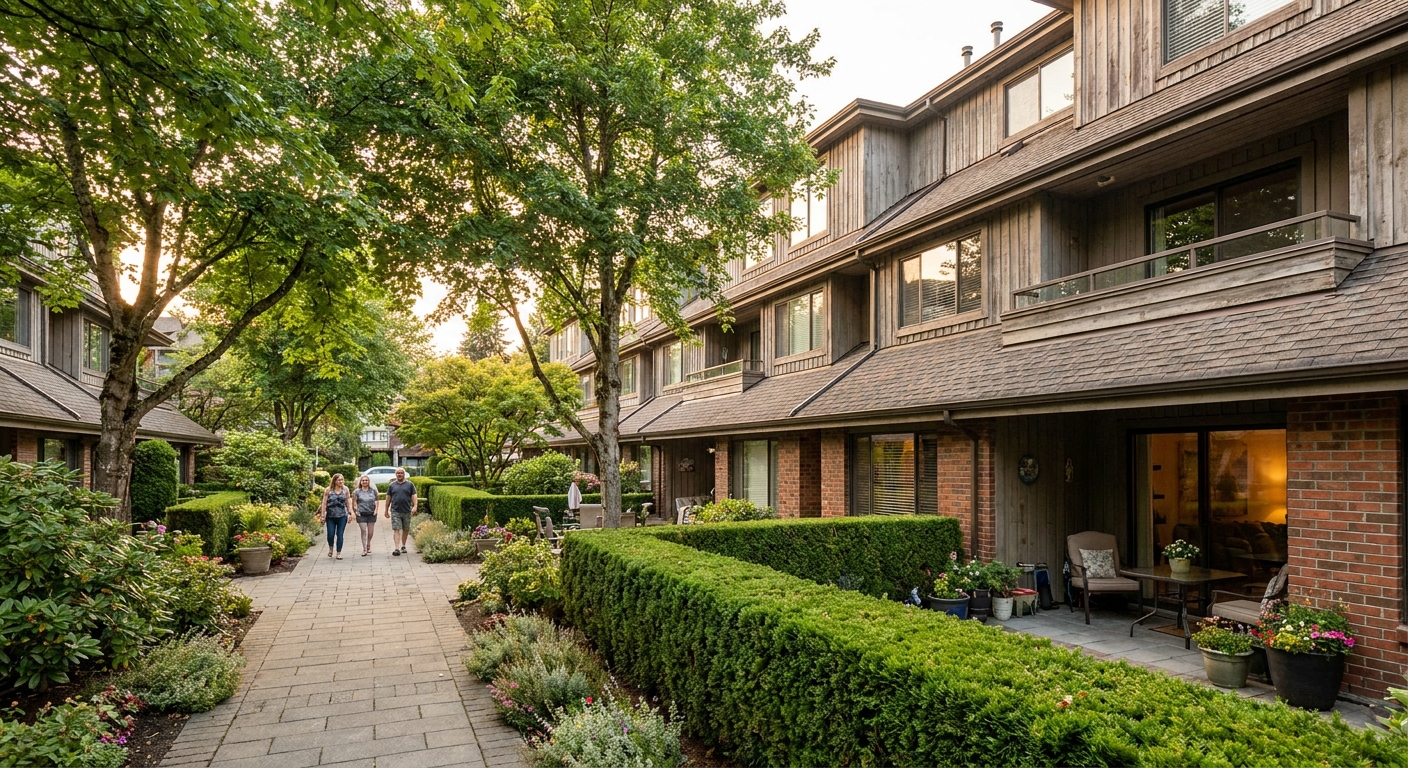
Under the Strata Property Act, a strata corporation must maintain and repair common property. Trees and hedges located in shared areas—such as entranceways, courtyards, visitor parking lots, and common walkways—are almost always the corporation’s responsibility. That duty includes routine pruning, hedge trimming, removal of dead or hazardous trees, and management of root systems that affect common infrastructure.
Duties Under the Strata Property Act
The Act does not list every maintenance task, but it sets the default: the corporation maintains common property, while an owner maintains their own strata lot. For trees and hedges, this means the strata council must plan for and schedule work on all common landscape vegetation. Failure to do so can lead to safety hazards, property damage, and potential legal claims. The council should also consider that some trees may be considered common assets even if planted by an owner.
Determining Responsibility: Common Property vs. Individual Lots
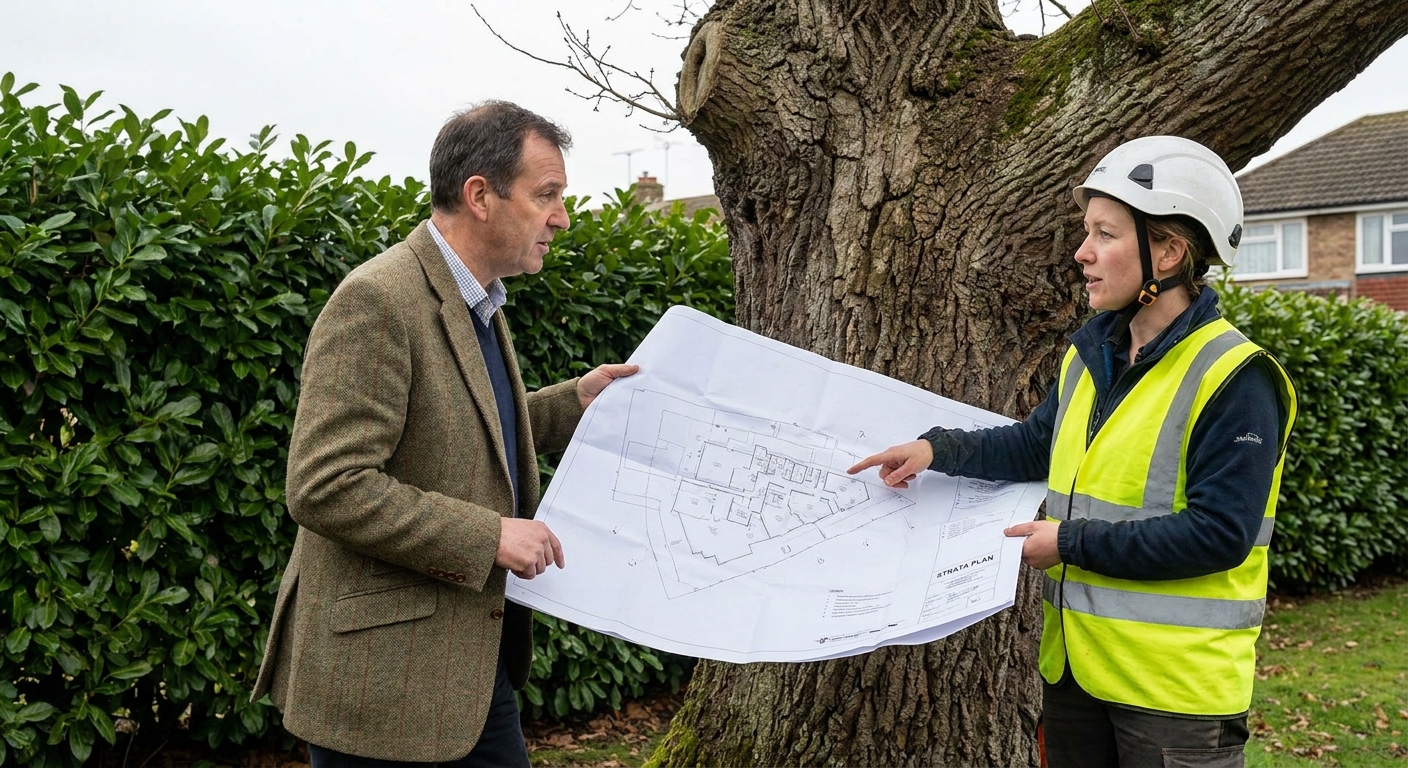
The strata plan is the definitive map. It shows boundaries between lots and common property. A tree whose trunk is entirely within a lot is the owner’s responsibility, unless a bylaw says otherwise. A tree whose trunk straddles a boundary is often treated as common property or shared, requiring joint action. Hedges often follow property lines; if a hedge is on common property, the corporation trims it. If it is on an owner’s lot, the owner is responsible, but the corporation may have rules about height and appearance. Councils should review the strata plan and any amendments, and when in doubt, obtain legal advice before authorizing work.
The Role of Strata Bylaws
Standard bylaws usually make owners responsible for their lots, including landscaping. However, many strata corporations adopt different rules. Some require owners to maintain hedges on limited common property, such as a patio or yard attached to a unit. Others take over all landscape maintenance to ensure a uniform look and reduce disputes. It is crucial that any maintenance contract aligns with what the bylaws actually require—otherwise, the corporation may pay for work it is not obligated to do, or owners may neglect plants the corporation must maintain.
Navigating Permit Requirements for Tree Work
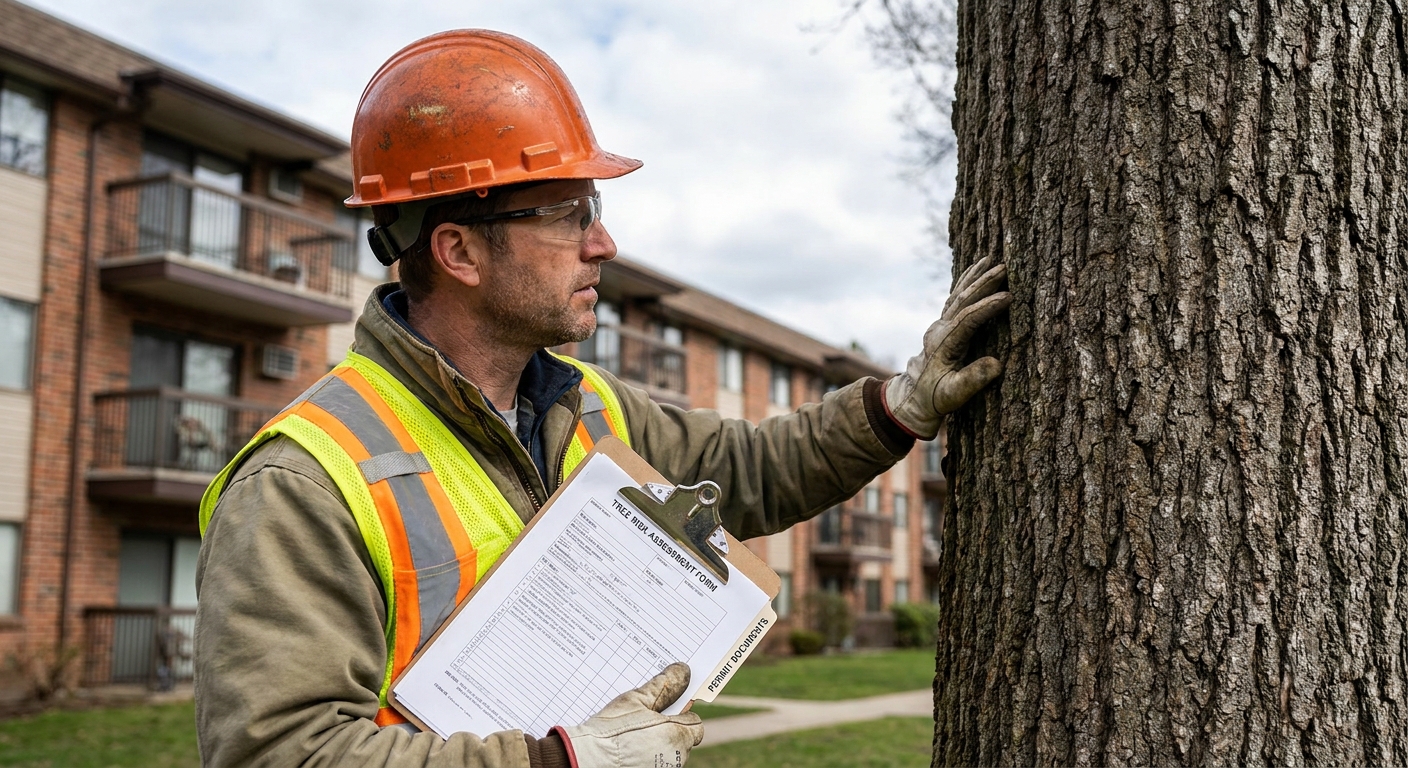
Many municipalities regulate tree removal and significant pruning through tree protection bylaws. A permit is often required for removing a tree above a certain size, pruning more than a specified percentage of the crown, or working on protected species. Strata corporations must ensure permits are in place before any work begins. The arborist you hire can usually prepare the permit application, including an arborist report if needed. Check with your local municipal planning or parks department early—delays in permitting can push work into storm season and increase risk.
Planning and Executing Tree and Hedge Maintenance
Seasonal Maintenance Planning
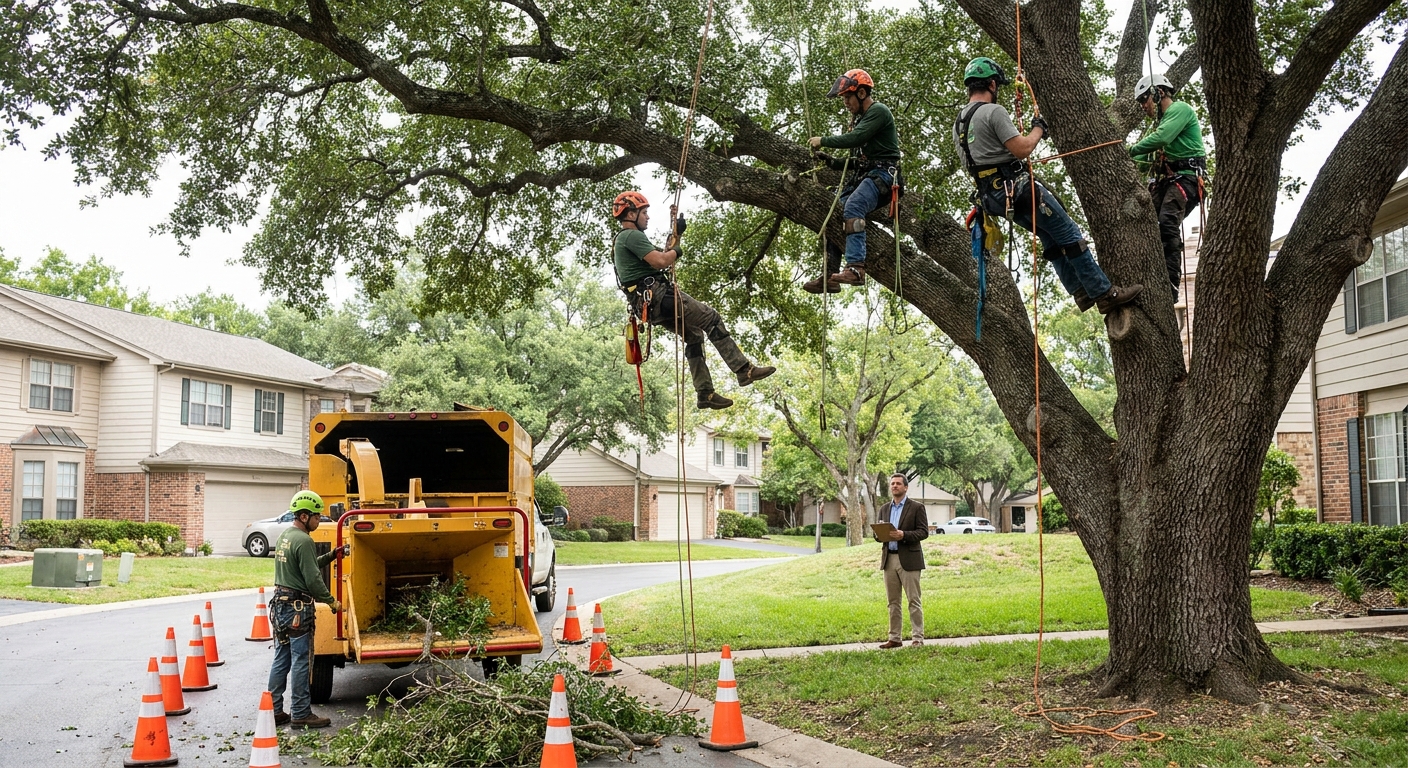
A proactive schedule reduces emergency work and keeps the landscape healthier. A typical annual cycle for strata properties includes: late winter/early spring structural pruning to remove deadwood and improve form; spring and summer hedge trimming (often two to three times per year depending on growth); late summer/fall hazard assessments to identify trees that may fail in winter storms; and ongoing monitoring for pests and disease. Scheduling work in the right season improves plant health and minimizes disruption to residents.
Key Services in Maintenance Contracts
A comprehensive maintenance contract for a strata property should cover: tree pruning (crown cleaning, thinning, deadwood removal), hedge trimming and shaping, tree removal when necessary, stump grinding, annual tree risk assessments, and emergency storm response. Some properties also benefit from periodic arborist reports documenting tree health and recommended actions. Avoid generic landscaping packages that treat trees as an afterthought—trees require specialized knowledge and equipment.
Selecting a Qualified Arborist or Tree Care Company
Look for a company that has experience with strata and commercial properties, carries adequate liability and workers’ compensation insurance, and can provide written safety plans and post-service documentation. Certifications matter: arborists with ISA certification and Tree Risk Assessment Qualification are trained to evaluate tree structure and risk systematically. When we assess tree risk or perform work on strata properties, our arborists hold both ISA certification and the Tree Risk Assessment Qualification. That means the assessments and pruning specifications we provide meet recognized industry standards. Also confirm that the contractor can handle municipal permits and has a clear emergency response protocol.
Risk Management and Safety
Hazard Assessment and Risk Management
Regular hazard assessments are the foundation of a safe strata property. An arborist should inspect trees for dead branches, cracks, decay, root damage, and signs of instability. Trees near buildings, walkways, and parking areas warrant the highest priority. Findings should be documented in a written report with photos and recommended actions. Strata councils should schedule assessments annually and after major storms, and keep records to demonstrate due diligence.
Emergency Tree Services and Storm Response
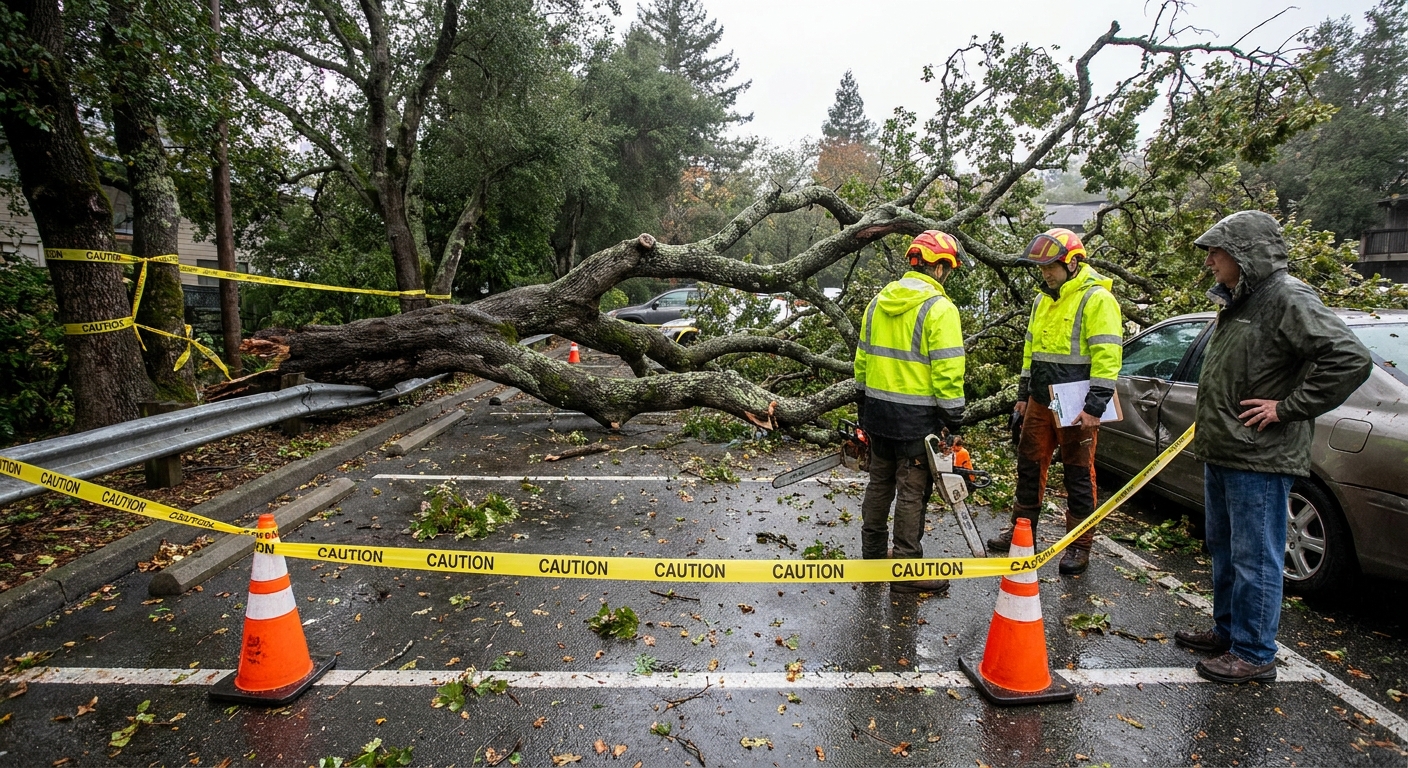
Even with good maintenance, storms can cause sudden failures. Every strata corporation should have a pre-arranged relationship with a tree service that offers emergency response. The plan should include: who to call, how to secure the area, and what to do if power lines are involved (always contact the utility first). Quick response reduces further damage and gets residents back to normal sooner. Make sure the emergency contractor is available 24/7 and can mobilize equipment quickly.
Managing Boundary Issues and Communication
Handling Overhanging Branches and Boundary Trees
Overhanging branches from a neighbouring property onto strata common land can be a source of friction. In most cases, the common law allows trimming back to the property line, but only if the work does not harm the tree’s health and complies with any tree protection bylaws. For boundary trees—those whose trunks straddle a property line—both parties have an interest, and major work should only proceed with written agreement. The same principle applies within a strata: if an owner’s tree overhangs common property, the corporation may trim it, but communication first is always better.
Communication and Documentation
Transparent communication prevents disputes. Before work begins, notify residents about scheduled dates, areas affected, and any temporary closures. After each visit, obtain a service report summarizing what was done and any concerns found. Keep permits, risk assessments, and correspondence in a central file. This documentation supports council decisions, helps with insurance claims, and shows owners that the corporation is managing its responsibilities diligently.
If your strata is reviewing its tree and hedge maintenance plan, start by clarifying responsibilities and securing a qualified arborist to assess the property. A proactive approach protects residents, property values, and the council itself.
Areas We Serve
Permits and responsibilities can play out differently from one place to the next. Our area hubs show where we work and how we approach strata tree and hedge care locally—pick your area to see what’s next and set up a visit.
- Central Saanich Arborists & Tree Services
- Colwood Arborists & Tree Services
- Esquimalt Arborists & Tree Services
- Highlands Arborists & Tree Services
- Langford Arborists & Tree Services
- North Saanich Arborists & Tree Services
- Oak Bay Arborists & Tree Services
- Saanich Arborists & Tree Services
- Sidney Arborists & Tree Services
- Victoria Arborists & Tree Services