
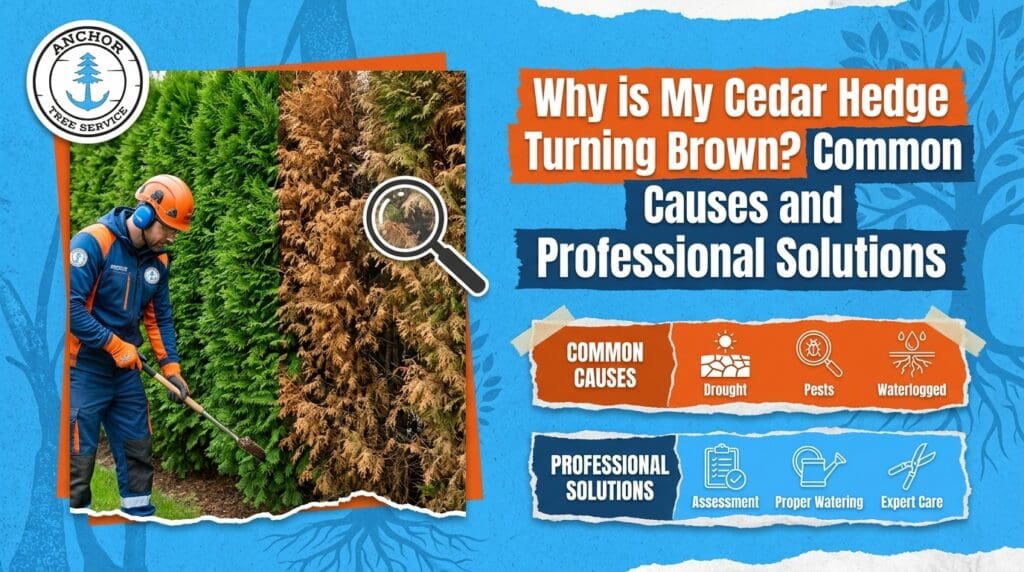
When a cedar hedge starts showing brown foliage, the color alone rarely tells you what is going on. The pattern of browning—where it appears, when it started, and whether it affects inner or outer growth—gives far more useful clues. We see this every season: a homeowner notices a few brown patches, assumes the worst, and reaches for a quick fix before the actual cause has been identified. That often wastes time and can make the problem worse.
Most cedar hedges turn brown for a handful of common reasons: drought stress, waterlogged roots, winter wind, pests, fungal disease, soil problems, chemical damage, or transplant shock. Each leaves a distinct signature. Learning to read that signature is the single most important step you can take before deciding whether your hedge will recover on its own or needs professional attention.
Understanding Normal Browning vs. Problematic Browning
Seasonal Needle Drop in Cedar Hedges
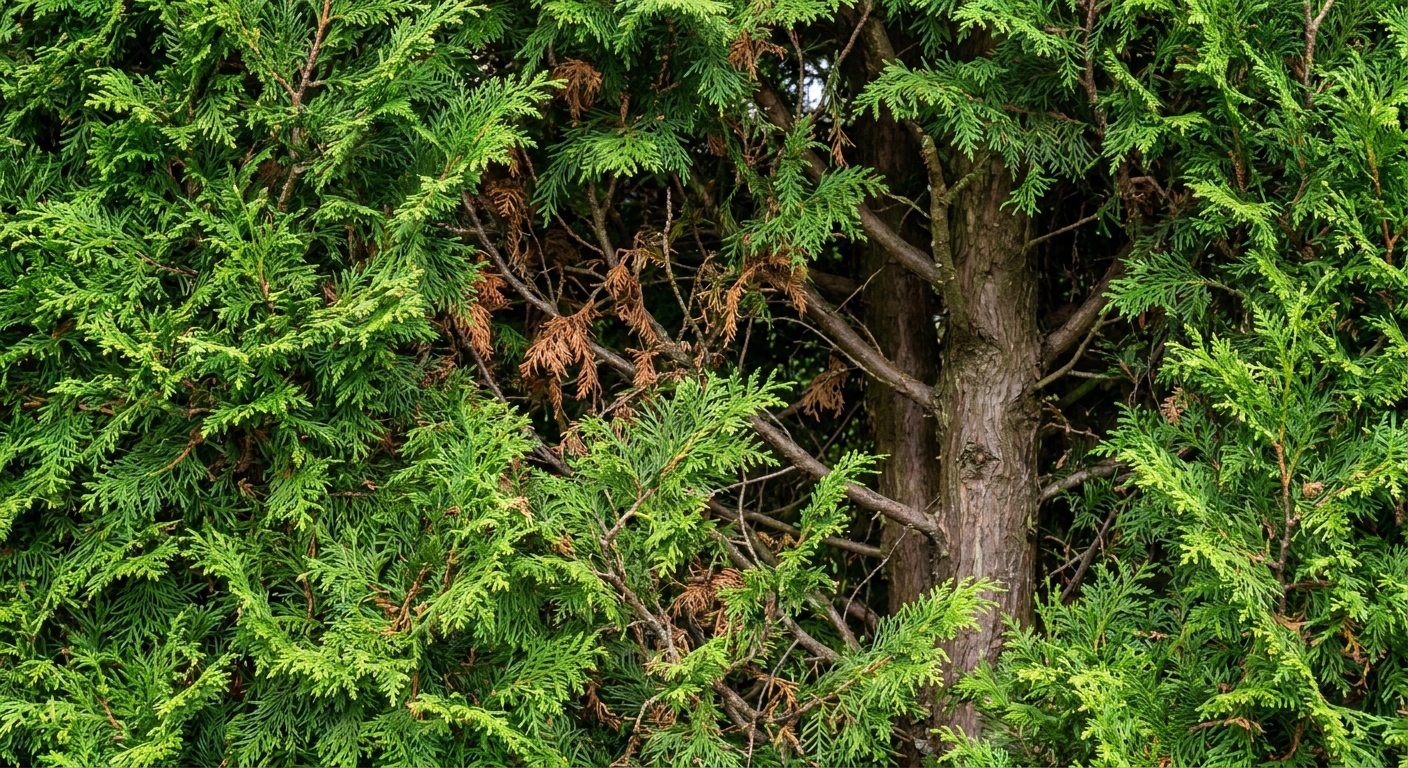
All cedars and arborvitae shed some older interior needles every year, usually in late summer or fall. This process, sometimes called flagging, affects the foliage closest to the trunk while the outer canopy stays green. It is normal for up to a third of the inner needles to turn yellow or orange, then brown, and drop. If you part the outer branches and see a light scattering of dry brown sprays tucked inside, while the outside of the hedge remains healthy, the hedge is simply doing its seasonal cleanup.
The key with seasonal needle drop is that it is uniform, light, and mostly hidden. It does not cause entire plants to fade, thin from the outside in, or produce large dead sections on the outer face. If you see that, you are likely looking at a stress response rather than a natural cycle.
When to Be Concerned: Signs of a Problem
Problematic browning usually shows up in ways that are hard to miss. Outer tips turning tan or brown, browning on only one side of the hedge, whole sections fading from the bottom up, or plants scattered through the row that are much worse than their neighbours all point to an underlying issue. Timing matters too: browning that appears after a hot dry spell, after a winter with strong wind, or after a long wet period is often tied to those conditions.
If the browning is accompanied by stunted growth, loose bark, thinning canopy, or brittle branches, the hedge is sending a stronger distress signal. In those cases, the cause is rarely just seasonal, and a closer look is warranted.
Common Causes of Cedar Hedge Browning
Most browning in cedar hedges comes down to water, weather, pests, disease, or soil. Some of these can look similar at first, but the details usually separate them. Here is what we look for with each common cause.
Drought Stress
Cedars have relatively shallow root systems and need consistent soil moisture, especially during hot, dry periods. When a hedge does not get enough water, the foliage often fades from green to a duller tone, then browns beginning at the tips and moving inward. The damage is often most visible after a heat wave or in hedges planted near foundations, pavement, or large trees that compete for water. Newly planted hedges are especially vulnerable, but even established hedges can decline after repeated dry summers.
We often find drought stress in narrow planting strips where root area is limited, or where roof overhangs block rainfall. The browning pattern is usually more pronounced on the outer and upper portions of the plant, where water loss is highest.
Overwatering and Poor Drainage
Too much water can cause browning just as readily as too little. When soil stays waterlogged, roots cannot get the oxygen they need, and they begin to fail. This often happens in low spots, clay-heavy soils, or areas where downspouts and sprinklers keep the root zone constantly wet. Browning from root problems tends to look different from drought scorch: instead of just the tips, entire plants may look dull, off-colour, or weak, and browning can appear in random, spreading patches.
Root rot organisms take advantage of prolonged saturation. Once the root system is compromised, the foliage above ground shows the stress even if the soil is wet when you check it. The worst cases often follow a wet winter followed by a wet spring, when soils never get a chance to dry out.
Winter Burn
Winter burn occurs when cedars lose moisture through their foliage during cold, dry, windy weather while the ground is frozen or too cold for roots to replace it. The result is brown, scorched-looking foliage, often concentrated on the south or southwest side of the hedge where sun and wind exposure are strongest. This is not a disease but a physical drying-out of the foliage.
The damage typically shows up in late winter or early spring, after the worst weather has passed. Plants that are already stressed from drought going into winter are more at risk. While the hedge may look bad, winter burn does not always kill the plant—new growth can push past it if the roots are healthy.
Pest Infestations
Several insects feed on cedar foliage and sap, causing browning or discoloration. Spider mites are a common problem in hot, dry conditions, producing a stippled or bronzed appearance and sometimes fine webbing. Budworms and bagworms chew on foliage, while cedar leaf miners tunnel inside the leaves. Bark beetles can also attack stressed cedars, though by the time they are established, treatment is difficult.
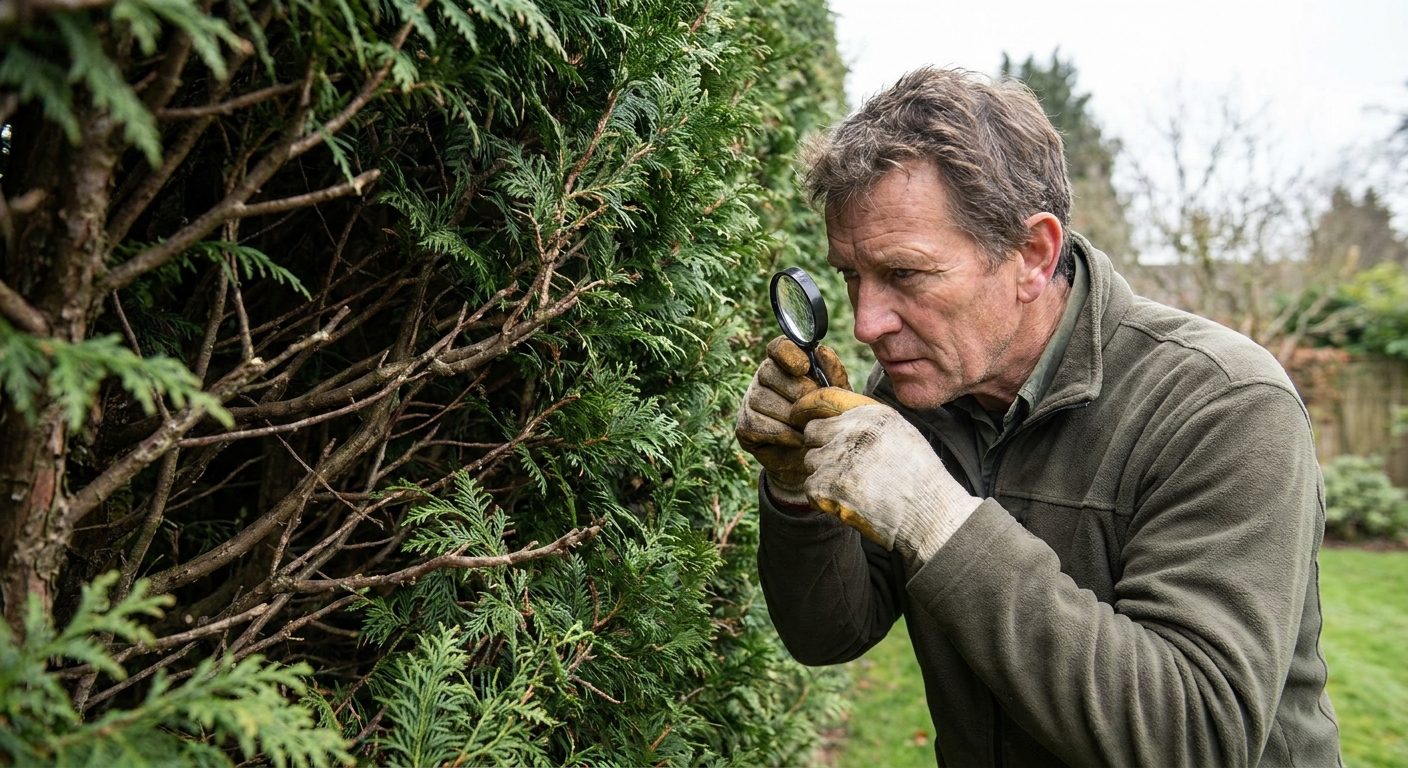
The first sign of a pest issue is often irregular browning along with visible signs like webbing, tiny holes, frass, or the insects themselves. A magnifying lens helps with mites, which are very small. Pest damage tends to be patchy and may be worse on sheltered parts of the hedge where mites are protected.
- Spider mites: stippled foliage, fine webbing, hot dry weather.
- Budworms and bagworms: chewed foliage, visible caterpillars or bags.
- Cedar leaf miners: tunneled, blistered leaves.
- Bark beetles: tiny holes in bark, decline in stressed plants.
Fungal Diseases
Fungal pathogens cause several distinct browning patterns. Root rot diseases, including Phytophthora and Armillaria, attack the root system and lead to gradual decline, off-colour foliage, and eventual dieback. Foliar blights like cedar leaf blight, caused by Didymascella thujina, produce small pale spots on the scale-like leaves that expand and turn the whole scale brown. In humid, crowded hedges, this blight can spread quickly, especially on lower branches.
You may see tiny black fruiting bodies on dead scales with leaf blight, while root rot may leave white fungal growth at the base of the tree. Diseases rarely appear in a healthy, well-managed hedge; they usually follow stress from poor drainage, overcrowding, or previous drought.
Soil and Nutrient Deficiencies
Cedars growing in soil that is too acidic or lacking essential nutrients like nitrogen or iron can turn yellow and brown, often with slow growth. Compacted soil also restricts root growth and reduces the hedge’s ability to take up water and nutrients. A soil test is the most reliable way to identify a deficiency, because the symptoms can mimic drought or root problems.
In our experience, nutrient deficiencies are less common than water or drainage issues, but they do occur, particularly in older hedges where the soil has been depleted over many years.
Chemical Damage
Herbicides and road salt can both cause browning in cedar hedges. Lawn weed killer that drifts or washes into the root zone can produce gradual browning, while salt runoff from de-icing products can scorch roots and foliage. Excessive fertilizer applications can also damage roots and cause tip burn. Chemical damage often shows up as uniform browning or scorched tips, and it may worsen over time if the source is not removed.
Transplant Shock
Newly planted cedar hedges sometimes brown shortly after installation as they adjust to a new site. This can be from root disturbance, changes in soil type, or difficulty taking up water before new roots establish. Transplant shock usually appears within the first year and may include drooping branches along with browning. Consistent moisture and protection from hot wind help, but the hedge needs time to establish before it will push strong new growth.
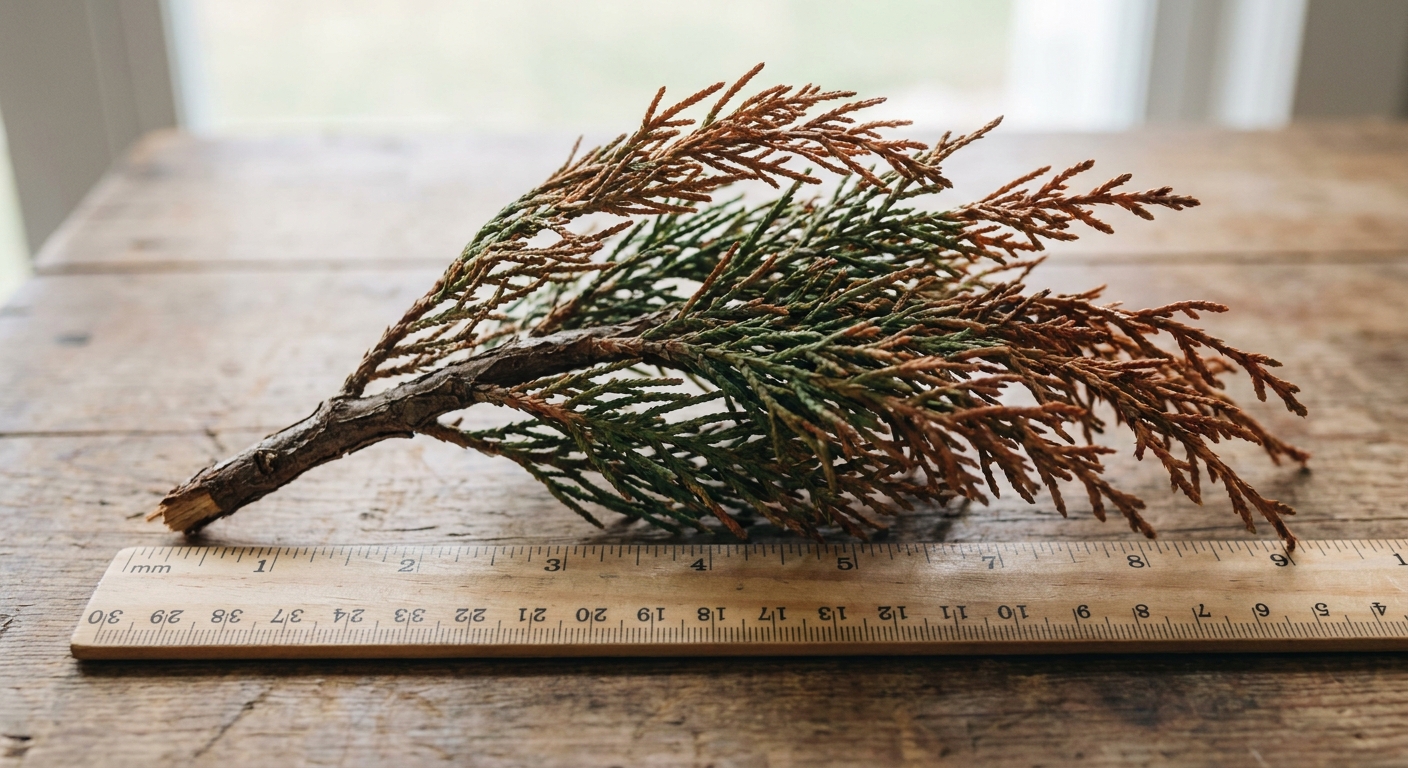
Diagnosing the Cause Based on Browning Pattern
Before treating a brown hedge, it helps to slow down and read the pattern. We approach every diagnosis by asking three questions: where is the brown, what does it look like, and what else is happening on the plant.
Browning on Tips or Entire Foliage?
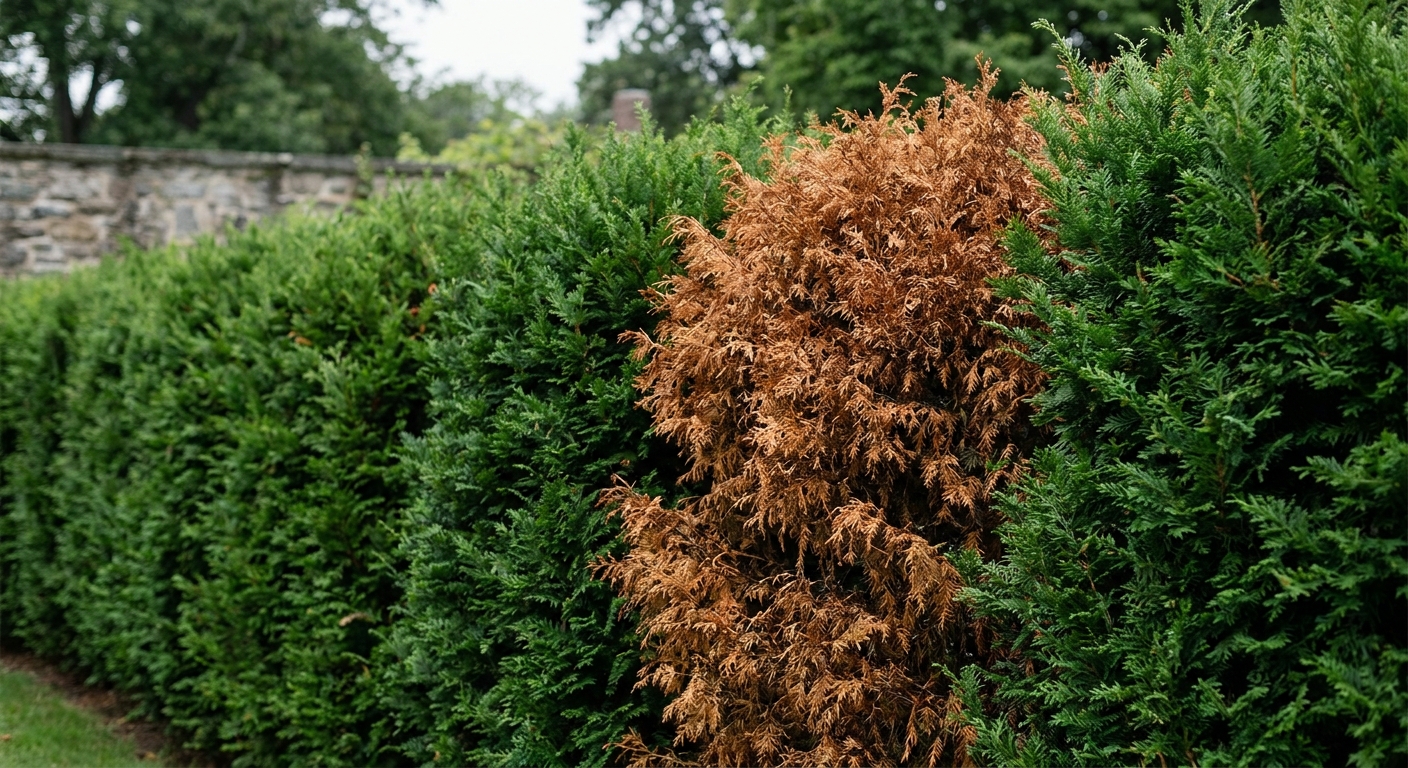
If only the outer tips are brown while the inner foliage stays green, drought stress, winter burn, or chemical damage are the most likely suspects. Tip browning often means the plant is losing water from the most exposed surfaces faster than the roots can replace it. If whole plants are off-colour, weak, and browning in random patches, root problems from overwatering or poor drainage become more likely.
Browning on One Side or Specific Areas?
Browning concentrated on one side of the hedge—especially the side facing afternoon sun or wind—often points to winter burn or drought stress. If only one or two plants in a row are much worse than the rest, the cause is usually local: a low spot where water collects, a broken irrigation line, a root injury from construction, or a plant that was planted too deep. We look at what is different about that spot before treating the whole hedge.
Browning Accompanied by Other Symptoms
Additional clues narrow the diagnosis quickly. Fine webbing suggests spider mites. Small black spots or black fruiting bodies on dead scales suggest a foliar blight. White fungal growth at the base points to root rot. Loose bark, thinning canopy, and brittle branches often indicate a plant in serious decline. If you spot any of these secondary signs, the problem is rarely just water and needs a closer inspection.
We walk the same diagnostic steps in the field: first the pattern, then the root zone, then pests and disease. Our arborists hold ISA Certified Arborist and Tree Risk Assessment Qualification credentials, so every diagnosis includes an assessment of whether the hedge poses any structural risk to the property.
When to Consult a Professional Arborist
There comes a point where guessing is no longer useful. If the browning is spreading despite your best efforts, if entire plants are declining, or if you see secondary signs like fungal growth, loose bark, or pest activity you cannot identify, a professional diagnosis is worth it. We have seen hedges treated for drought when the real issue was root rot, and hedges repeatedly sprayed for pests when the actual problem was compacted, waterlogged soil. Each wrong guess costs the hedge time it does not have.
An arborist can identify the specific cause, check the root zone, and recommend a targeted response. For cases involving root rot, structural decline, or large dead sections, professional removal and replacement may be the only realistic option. The earlier a true problem is caught, the more likely the hedge can be saved and the rest of the row protected.
If your cedar hedge is turning brown and the pattern is not making sense, a trained second set of eyes can make all the difference.
Areas We Serve
Brown patches often tie back to wind, rainfall, and soil that vary by neighbourhood. Our area hubs bring that context together, including how we work nearby, seasonal timing, and practical advice, so you can zero in on guidance that fits your hedge.
- Central Saanich Arborists & Tree Services
- Colwood Arborists & Tree Services
- Esquimalt Arborists & Tree Services
- Highlands Arborists & Tree Services
- Langford Arborists & Tree Services
- North Saanich Arborists & Tree Services
- Oak Bay Arborists & Tree Services
- Saanich Arborists & Tree Services
- Sidney Arborists & Tree Services
- Victoria Arborists & Tree Services